
 Climate
 Privacy
 Bob Dylan
 Drones
 Data Centers
 AI Governance
 2026 Maine Senate Race
Germany Expands Military Drone Programs
Coverage from The New York Times, Euronews, and others
Articles
7
Active Days
44
The Topic
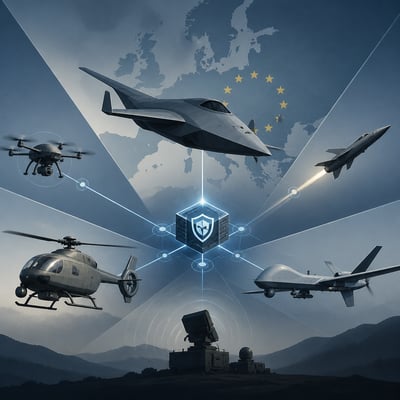
Germany is restructuring military procurement and expanding industrial capacity to adopt drones, loitering munitions and counter-drone systems more quickly. The effort brings start-ups, established defense companies, Ukrainian partners and public research institutions closer to the Bundeswehr, while major programs are being demonstrated and promoted at ILA Berlin. The shift could improve the speed and scale of German drone adoption, but testing failures, dependence on vulnerable digital networks, oversight concerns and local opposition remain significant constraints.
First Article: 06/09/26
Latest Article: 07/22/26
Summary
- Germany approved nearly $1 billion in contracts for loitering munitions, including systems from newer drone companies.
- The Bundeswehr is working more closely with start-ups, Ukrainian firms and research institutions to shorten the path from development to military use.
- ILA Berlin highlighted autonomous aircraft, counter-drone interceptors and uncrewed aircraft intended to operate alongside crewed fighters.
- Airbus is targeting a 2029 operational delivery of the U740 Valkyrie to the German Air Force and early-2030s availability for the U760 Ravenstorm.
- Berlin is promoting defense manufacturing and drone development while residents and anti-war activists oppose some new production sites.
- Early trials exposed crashes, navigation problems and user-interface weaknesses, underscoring the gap between demonstrations and dependable field deployment.
- German military officials continue to support human control because drones depend on GPS, cloud services and communications networks that may be disrupted.
History
Germany's drone story now emphasizes broader industrial scaling and more explicit execution, with domestic production and procurement moving closer to operational deployment. The current version also adds Kratos as a new partner and frames community opposition more concretely around specific production sites.
The story has broadened from Airbus’s drone showcase into a wider German defense-procurement shift centered on faster acquisition, domestic production, and battlefield-tested systems. The new version also adds concrete strains on that shift, including crashes, navigation failures, and political scrutiny.
Featured
Timeline: 44 Days
Hover over any logo to see coverage summary, click for full article.