
 Climate
 Privacy
 Bob Dylan
 Drones
 Data Centers
 AI Governance
 2026 Maine Senate Race
Army Scales Low-Cost Combat Drones
Coverage from Aol, Business Insider, and others
00/00/0000
Articles
24
Active Days
90
The Topic
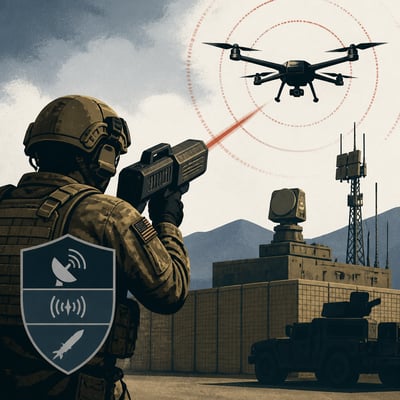
The U.S. Army is expanding the use of inexpensive drones for reconnaissance, attack, breaching, electronic-warfare targeting, and counter-drone missions. Exercises with the 101st Airborne Division and other units emphasize mass, low cost, simple operation, rapid local production, and training through simulators and repeated live flights. The shift could give smaller units more persistent battlefield coverage while reducing exposure of soldiers, but it also creates demands for batteries, operators, logistics, realistic training conditions, and reliable defenses against enemy drones.
First Article: 04/27/26
Latest Article: 07/25/26
History
The story now emphasizes that the Army is not just experimenting with cheap drones, but actively building the training, manufacturing, and support systems needed to field them at scale. It also adds clearer evidence that counter-drone defense and sustainment burdens are becoming central constraints.
The story has shifted from general Army counter-drone experimentation to a more concrete scaling effort for low-cost offensive and defensive drones. The new material emphasizes soldier-built systems, mass production, simulator-based FPV training, and autonomy as the Army tries to make drones fieldable in large quantities.
- 101st Airborne soldiers built roughly 150 of 228 attack drones in one rotation.
- Those ABE 1.01 attack drones reportedly cost about $750 each.
- Army leaders want drones available in ammunition-like quantities.
- FPV training now includes 20–30 simulator hours before live flights.
- Bumblebee V2 adds target recognition and autonomous targeting.
The story is now more concretely tied to specific Army units, systems, and exercises, showing counter-drone work moving from broad training activity to named implementations and field tests. It also adds a new dimension: drones are being used for offensive engineer tasks, not only as threats to defeat.
The story has expanded from a narrower U.S./allied counter-drone training narrative into a broader, more operational military adaptation effort that includes new units, new systems, and more varied battlefield scenarios. It now emphasizes actual adoption and integration of counter-UAS tools, not just testing and exercises.
- 101st Airborne Division and British forces are now included.
- Lorica Technologies' Mule 28 is being used in remote breaching tests.
- Ground robots and smoke are now part of field exercise scenarios.
- Handheld jammers and detect-and-defeat platforms are used for installation security.
- Some autonomy features remain developmental rather than fully fielded.
The story shifts from a broad account of counter-drone drills to a more operational picture of routine, layered base-defense and exercise testing. The new emphasis is on realistic battlefield practice—detection, takeover, and defeat—plus the addition of specific systems and actors.
The story now centers more explicitly on NATO-aligned, installation-level counter-drone testing, with new emphasis on JBER and Lithuania as active sites for faster, cheaper defenses. It also adds more concrete operational detail about the systems and training methods being fielded.
The story now emphasizes specific tools and execution mechanisms rather than just broader counter-drone training trends. It also newly foregrounds Fort Bragg’s innovation outpost, Project Flytrap, and low-cost fabrication as part of an operational testing pipeline.
The story now puts greater emphasis on more operational, realistic counter-drone testing, especially cheaper intercept methods and force-on-force drills, rather than just broad training expansion. It also adds a clearer role for allied multinational exercises in Lithuania and for industry feedback loops in refining these tools.
The story is largely unchanged, but the framing has broadened from specific counter-drone tactics to a wider emphasis on practical testing of layered defenses against electronic warfare and crowded battlefield conditions. The new version also more explicitly centers Project Flytrap and allied/NATO-linked training as part of that execution.
The story has broadened from a mainly U.S. Army counter-drone training push into a more explicitly multinational NATO exercise effort. The biggest new emphasis is on live testing of multiple counter-UAS methods and the practical limits of those systems in realistic field conditions.
The story has broadened from general counter-drone training and base defense into more specific, more mature field testing against FPV drones, swarms, and one-way attack systems. The new reporting also adds concrete implementation details, including live-fire evaluation, drone interception, electronic attack, and rapid-iteration tools like 3D printing.
- FPV drones, swarms, and one-way attack systems are now central threats.
- Live-fire evaluation is being used in counter-drone exercises.
- The Fort Bragg Joint Innovation Outpost appears as a testing hub.
- Lithuania is now part of the reporting scope.
- 3D printing is being used to support counter-drone training.
U.S. military units are expanding counter-drone training and base defense as small unmanned aircraft become a more frequent operational threat. The material emphasizes practical training, layered defenses, and lower-cost systems designed to detect, jam, or intercept drones more efficiently than traditional air defenses. It also shows the military building new drone skills for both defense and authorized operational use.