
 Climate
 Privacy
 Bob Dylan
 Drones
 Data Centers
 AI Governance
 2026 Maine Senate Race
Coastal Shark Patrol Drones Expand
Coverage from The Guardian, The Conversation, and others
Articles
12
Active Days
67
The Topic
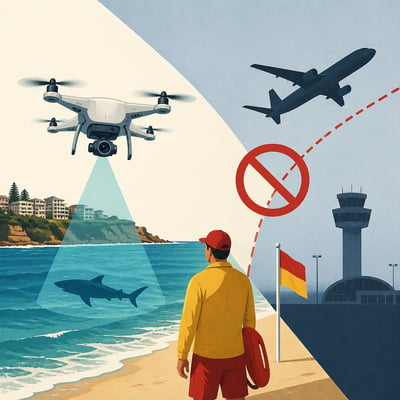
New South Wales and New York are expanding drone patrols to detect sharks, support beach closures and assist with swimmer safety. NSW plans daily surveillance across 70 beaches, including all 38 Sydney ocean beaches, while New York is increasing its Long Island fleet and staffing. The programs improve aerial observation and may support broader rescue work, but detection remains limited by visibility and submerged sharks, and there is no clear evidence that drone patrols reduce shark bites.
First Article: 05/22/26
Latest Article: 07/27/26
Summary
- NSW will provide daily drone flights across 70 beaches, including all 38 Sydney ocean beaches, from 1 July.
- Surf Life Saving NSW reports more than 2,000 shark interactions identified and prevented this year, though the measure is not independently evaluated in the material.
- A CASA exemption allows shark-monitoring flights over Coogee Beach, with NSW seeking to make the arrangement permanent because of airport airspace restrictions.
- NSW funding includes trials of AI shark-detection systems and SharkSmart listening stations for tagged sharks.
- New York plans to expand its Long Island fleet from 30 to 46 drones and operators from 47 to 67.
- Drones can detect surface sharks and support closures or rescues, but poor water visibility and submerged sharks limit coverage.
- Experts and researchers say more sightings may reflect increased surveillance rather than a larger shark population, and evidence that drones reduce bites remains lacking.
History
The story is largely unchanged, but it now adds clearer implementation details around NSW timing, Coogee airspace permissions, and new operational claims from Surf Life Saving NSW. The New York expansion remains the same in scale, while the overall framing shifts slightly toward swimmer rescue and closure decision-making.
The story has broadened from routine shark-spotting drone use and airspace limits into a larger operational evaluation of how far drone patrols can be scaled and what else they can do. The new version adds explicit limits on detection effectiveness, AI trials, and the possibility that more surveillance will increase precautionary closures and economic disruption.
Featured
Timeline: 67 Days
Hover over any logo to see coverage summary, click for full article.