History
07/27/20263 new articles
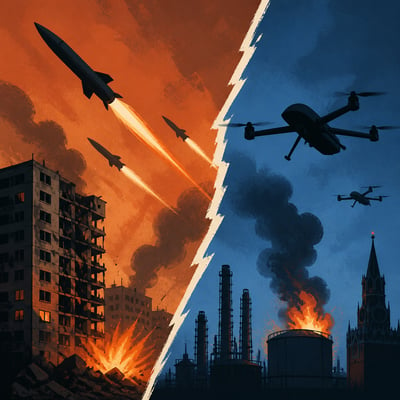
The core story is still reciprocal long-range strike escalation, but the current version adds sharper detail on scale and capabilities: Russia’s attacks now explicitly include jet-powered systems, and Ukraine’s strike on Moscow is described as exceeding 400 drones in a single attack. The framing also shifts toward sustained pressure on air defenses and ammunition stocks rather than just interceptor shortages.
07/25/20265 new articles
The story now clearly broadens from drone-heavy exchanges to a more integrated drone-and-missile air campaign, with Russia also using glide bombs and ballistic or hypersonic weapons. Ukraine’s retaliation is also shown reaching farther into Russian territory and maritime routes, making the conflict’s geographic and operational scope more expansive.
- Russian barrages now include glide bombs, cruise missiles, and ballistic or hypersonic weapons.
- Ukraine is striking ports and shipping in the Black Sea and Sea of Azov.
- Fuel-production logistics and missile-component plants are newly named targets.
- Front-line maneuver is constrained by dense drone activity.
- Patriot shortages are specifically tied to ballistic-missile defense limits.
07/24/202646 new articles
The story has expanded from general large-scale drone exchanges into a more detailed picture of increasingly sophisticated mass strikes and air-defense strain. The biggest new emphasis is Russia’s faster, harder-to-intercept attack packages and Ukraine’s reported interceptor shortages, alongside clearer evidence of Ukrainian long-range retaliation.
- Russia is using mixed strike packages with drones, missiles, and guided bombs.
- Jet-powered Shahed variants are reported to be increasing interception difficulty.
- Ukraine faces reported Patriot interceptor shortages.
- UN reporting highlights FPV drones causing civilian casualties and agricultural disruption.
- Ukraine’s long-range drone raids toward Moscow are now more prominent.
06/28/20263 new articles
The story has shifted from a broad account of reciprocal strikes to a sharper emphasis on the scale of drone warfare itself, especially record-sized salvos and the central role of air defenses. It also adds more uncertainty around damage assessment, highlighting gaps between official claims and independently verified effects.
06/20/2026Topic Formed
Russian long-range missile and drone strikes on Ukrainian cities have intensified, producing repeated civilian casualties, building damage, and power disruptions. Ukraine is also expanding drone attacks into Russia, including the Moscow region and oil-related infrastructure, as both sides reject or ignore short ceasefire pauses. The pattern reflects a sustained exchange of deep strikes that complicates diplomacy and increases pressure on air defenses and civilian infrastructure.

 Climate
 Privacy
 Bob Dylan
 Drones
 Data Centers
 AI Governance
 2026 Maine Senate Race