
 Climate
 Privacy
 Bob Dylan
 Drones
 Data Centers
 AI Governance
 2026 Maine Senate Race
Taiwan Builds Drone Deterrent
Coverage from Reuters, The Jerusalem Post, and others
Articles
22
Active Days
84
The Topic
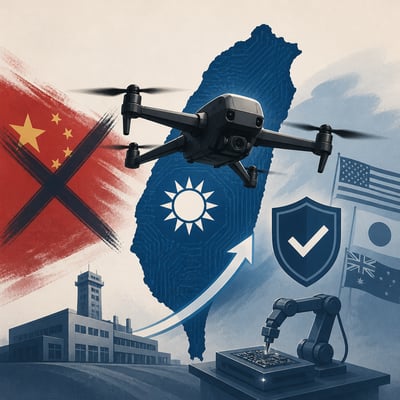
Taiwan is pursuing a major expansion of military drones as part of an asymmetric defense strategy aimed at deterring Chinese pressure. The government has proposed NT$210 billion through 2031 for surveillance, coastal-attack, and small surface drones, while the opposition Kuomintang has offered a separate NT$240 billion plan with different funding and oversight rules. U.S. officials and Ukrainian defense companies are encouraging deeper cooperation, linking Taiwan’s plans to battlefield lessons from Ukraine and the growing use of maritime drones.
First Article: 05/05/26
Latest Article: 07/27/26
Summary
- Taiwan’s government proposed NT$210 billion through 2031 for surveillance, coastal-attack, and small unmanned surface drones.
- The opposition Kuomintang proposed up to NT$240 billion over six years, favoring regular budgets and different procurement oversight.
- President Lai Ching-te and U.S. diplomat Raymond Greene framed drones as central to Taiwan’s asymmetric defense and deterrence.
- Taiwan is drawing on Ukraine’s combat experience, including the use of maritime drones and battlefield-tested systems.
- Ukrainian drone companies are exploring production, sales, and technology partnerships with Taiwan and Japan.
- Taichung is emerging as a focal point for Taiwan’s drone industry and defense manufacturing.
- The main unresolved issues are funding structure, parliamentary approval, procurement control, and integration with industrial policy.
History
The story now places stronger emphasis on Taiwan’s drone buildup as part of a broader asymmetric defense strategy and adds maritime drones as a more explicit battlefield lesson from Ukraine. It also sharpens the unresolved policy questions around funding structure, oversight, and industrial integration.
The story has shifted from a broad Taiwan drone buildup to a specific legislative and budget showdown over how to fund and oversee a major military drone expansion through 2031. It also now more explicitly centers asymmetric coastal defense, with new attention to U.S., Ukrainian, and Japanese links and to Taichung as an industrial hub.
Featured
Timeline: 84 Days
Hover over any logo to see coverage summary, click for full article.