
Last Update: 08/01/2026 at 1:33 PM EST

Analysis of Dylan’s Dystopian Masterpiece

Coverage from Forward, Collider, and others

Articles

24

Active Days

5983

The Topic
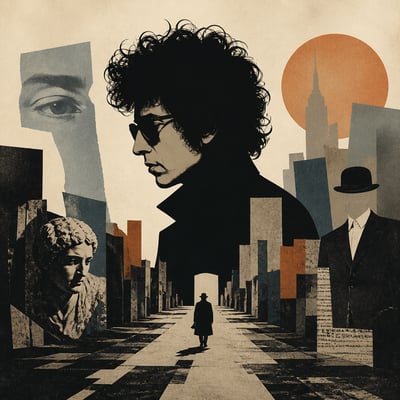
Analysis of Dylan’s Dystopian Masterpiece topic image

This topic centers on Bob Dylan's "Desolation Row" and the larger pattern of how Dylan is read as both a songwriter and a symbol. The material repeatedly returns to his electric-era backlash, his refusal of fixed public roles, and the way later writers and musicians use him to think through authorship, persona, and loss. "Desolation Row" itself is treated as a densely layered lyric whose surreal imagery is often read as masking a more direct emotional or social core.

First Article: 01/01/00

Latest Article: 07/24/26

Summary

  • "Desolation Row" is the main anchor, with repeated attention to its surreal cast of characters, gothic imagery, and final emotional turn.
  • Several pieces treat Dylan as a figure who resists stable interpretation, moving between protest icon, evasive celebrity, and self-fashioned persona.
  • The 1965 electric shift and the hostile audience response remain an important background frame for how Dylan's role is discussed.
  • One thread reads the song as masking heartbreak or failed relationship drama beneath its dense lyrical surface.
  • Another thread emphasizes the song's social decline imagery, linking it to broader decay, disorder, and postwar cultural unease.
  • Woody Guthrie and "Song to Woody" appear as part of the larger discussion of Dylan's songwriting origins and self-construction.

History

06/29/2026

The story broadens from mainly interpretive readings of "Desolation Row" into a wider account of Dylan as a public persona and influence on later musicians. The new material especially emphasizes Bowie and Clapton using Dylan as a model, symbol, or absent reference point.

06/26/2026

The framing has shifted from a broad survey of Dylan interpretation to a more focused reading of "Desolation Row" as the central site where his lyric method is being explained. The current version also narrows the broader Dylan story around collage, ambiguity, and the blending of folk tradition with prophecy and myth.

Featured

Timeline: 5983 Days

2010Jan 1Mar 5May 28Jul 30Oct 22Dec 242011Jan 1Mar 5May 28Jul 30Oct 22Dec 242012Jan 1Mar 4May 27Jul 29Oct 21Dec 232013Jan 1Mar 5May 28Jul 30Oct 22Dec 242014Jan 1Mar 5May 28Jul 30Oct 22Dec 242015Jan 1Mar 5May 28Jul 30Oct 22Dec 242016Jan 1Mar 4May 27Jul 29Oct 21Dec 232017Jan 1Mar 5May 28Jul 30Oct 22Dec 242018Jan 1Mar 5May 28Jul 30Oct 22Dec 242019Jan 1Mar 5May 28Jul 30Oct 22Dec 242020Jan 1Mar 4May 27Jul 29Oct 21Dec 232021Jan 1Mar 5May 28Jul 30Oct 22Dec 242022Jan 1Mar 5May 28Jul 30Oct 22Dec 242023Jan 1Mar 5May 28Jul 30Oct 22Dec 242024Jan 1Mar 4May 27Jul 29Oct 21Dec 232025Jan 1Mar 5May 28Jul 30Oct 22Dec 242026Jan 1Mar 5May 28Jul 30Oct 22Dec 24

Additional Articles

⭐⭐⭐⭐⭐⭐⭐⭐

HamptonThink.org / David Polanski02-19-2024
On the HamptonThink website, an essay examines Bob Dylan's songs and scholarly reception through a gothic, anti liberal, revolutionary framework.
Psyche / Elliott Landy03-09-2021
In this Psyche essay, a critic explores how Bob Dylan's early-1960s New York folk compositions transformed traditional songs into prophetic modernist collages.

⭐⭐⭐⭐⭐

Untold Dylan / Tony Attwood06-30-2026
Bob Dylan’s January 1962 Leeds Music New York recording of Ballad for a Friend is analyzed as evidence of rapid early compositional development shaped by Shelton and Hammond.
Chris Gregory / Chris Gregory10-29-2024
On chrisgregory.org, an article examines Bob Dylan's 1978 song No Time to Think from the album Street-Legal through literary, religious, and political symbolism.
Pushing Ahead of the Dame / Chris O'Leary, David Bowie03-15-2010
On 2010-03-15, a BowieSongs blog post examined David Bowies 1971 track Song for Bob Dylan in relation to Bob Dylans late-1960s retreat.
Mitch Bogen Blog / Mitch Bogen01-17-2026
In January 2026, Mitch Bogen published a blog post discussing Bob Dylan's countercultural influences and outsider themes via Blood on the Tracks.
Musing From The 305 / Alex Perez09-05-2023
In a Substack post set in early-2000s Miami, Alex Perez recounts how Bob Dylan's Not Dark Yet reshaped his path from baseball toward writing.
Thoughts Mostly About Film / Tyler Sage02-18-2022
In a recent Substack journal entry, Tyler Sage analyzes Bob Dylan's mid-1960s controversies and interprets Desolation Row as a disguised story of romantic heartbreak.
Perfect Duluth Day / Unknown05-18-2024
In an essay on the Duluth-based site Perfect Duluth Day, a local writer analyzes Bob Dylan's depictions of Minnesota in songs and Chronicles, Volume One.
State of Sound / David Rea01-17-2026
In a retrospective review, State of Sound Magazine examines Bob Dylan's 1964 Columbia album The Times They Are A-Changin' and its politically charged songs.

⭐⭐⭐

Untold Dylan / Tony Attwood11-11-2025
Larry Fyffe and tolstoy published an article on bob-dylan.org.uk about Dylan's Tarantula and literary influences.
Words and Pictures / Steve Paul10-08-2023
Steve Paulk compares Billie Holiday's 1958 album Lady in Satin to Bob Dylan's standards recordings and vocal phrasing in an online essay at the cited URL.
dsmag.in01-01-1900
Peter Cordwell's DSMag essay published on Dec 29, 2024 examines Dylan's influences, notably J. D. Salinger and George Orwell.
filmcolossus.com / Chris01-02-2025
The article analyzes A Complete Unknown and Dylan's evolving role in 1960s folk culture.
Talkhouse / Chat Pile10-30-2024
An online essay examines Bob Dylan's 1978 song No Time to Think, situating its tarot, Shakespearean, and political imagery within the Street Legal era.
Far Out Magazine / Reuben Cross02-20-2026
Bob Dylan frames Highway 61 as a recurring subject in his 1960s songs and the album Highway 61 Revisited, linking blues cities to American narratives.
Far Out Magazine / Lucy Harbron01-13-2026
Bob Dylan’s 1970 album Self Portrait, and its opening song All the Tired Horses, is analyzed as a deliberate attempt to repel fame and public expectation.
Far Out Magazine / Tom Taylor12-30-2025
Bob Dylan in 1960s New York City is examined for early songs and Woody Guthrie influence.
Far Out Magazine / Tom Taylor12-17-2025
Bob Dylan's song 'Tangled Up in Blue' is examined in this article for its meaning, influences, and narrative techniques.
faroutmagazine.co.uk / Callum MacHattie04-08-2025
Far Out Magazine examines Bob Dylan’s Desolation Row and its social critique on Highway 61 Revisited, referencing Al Kooper and Mark Polizzotti.

⭐️⭐️

Untold Dylan / Tony Attwood, Larry Fyffe08-27-2025
Larry Fyffe examines Bob Dylan's historical allusions and satirical portrayals in songs and writings on bob-dylan.org.uk.