
Last Update: 06/03/2026 at 4:25 AM EST
Dylan And Beatles Mutual Influence
Coverage from The New York Times, San Gabriel Valley Tribune, and others
Articles
51
Latest Article
06/01
Active Days
5423
Executive Summary
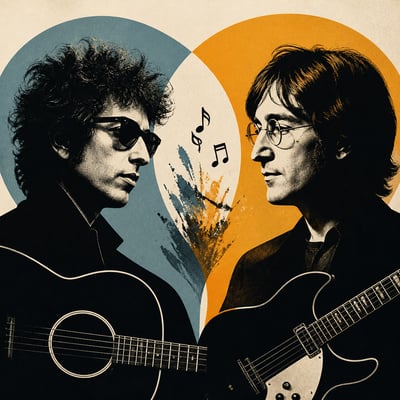
Current coverage revisits Bob Dylan's relationship with The Beatles as a durable story of mutual influence, rivalry, and song-level borrowing. The strongest signal is mid-1960s interaction around electric change, lyrical ambition, and closely linked songs such as Norwegian Wood, Fourth Time Around, and I'm A Loser. Recent pieces also frame this exchange through new books, interviews, and retrospective analysis rather than new archival discoveries.
Key Points
- Mid-1960s Dylan-Beatles exchange remains the dominant frame, especially around influence, imitation, and creative competition.
- Several pieces revisit specific song pairings, most notably Norwegian Wood and Fourth Time Around, as well as I'm A Loser and Dylan's electric-era shift.
- The Beatles are repeatedly described as absorbing Dylan's lyrical approach, while Dylan is also shown responding to Beatles material and presence.
- George Harrison appears as the most durable bridge figure, connected to admiration, collaboration, and later career revival narratives.
- The discussion is mostly historical rather than event-driven, with recent articles reinterpreting familiar episodes instead of reporting fresh developments.
- Archival and session-based references matter more than live-performance coverage in this set, though a few articles use performance moments to support the larger influence story.
- The topic is coherent and stable, but some claims rely on interpretive readings of songs and anecdotes rather than hard new evidence.
Featured Article
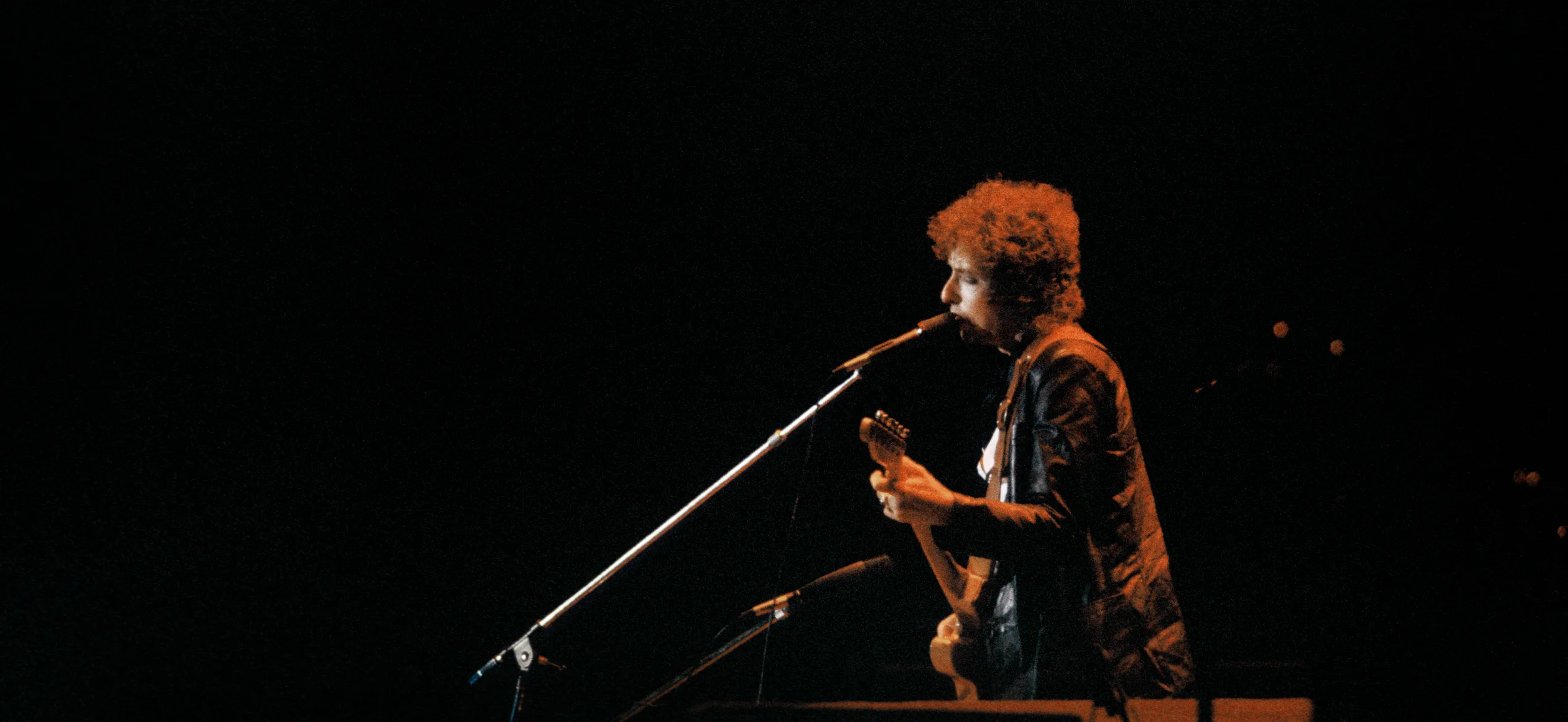
Bob Dylan and John Lennon met at the May Fair Hotel in London on May 26, 1966, while Pennebaker filmed a limo ride tied to Norwegian Wood and Fourth Time Around influence claims.
Coverage Timeline: 5423 Days
Hover over any logo to see coverage summary, click for full article.
Additional Articles
⭐⭐⭐⭐⭐
Jim Windolf’s Where the Music Had to Go reviews how Dylan and the Beatles forged a 1960s creative rapport through mutual musical influence.
Jan Barten from Breda presents a three-four 4th Time Around cover that is compared with Blonde on Blonde Nashville session takes and Daniel Lanois multirhythm debates.
⭐⭐⭐
Jim Windolf analyzes reciprocal influence between Bob Dylan and the Beatles in a book tied to disputed 1966 meeting details and studio-era songwriting dynamics.
John Lennon in 1979 recorded a critical dictaphone response to Bob Dylan's Gotta Serve Somebody, later linked to the Serve Yourself parody on the 1998 John Lennon Anthology.
An analysis centers on Fourth Time Around and D. A. Pennebaker’s taxi-ride footage to frame Dylan and John Lennon’s rivalry as admiration with provocation.
Jim Windolf discusses Dylan-Beatles mutual influence, electric-era shifts, and Dylan political ambiguity in an interview tied to Paul McCartney comments about Desert Trip 2016.
Bob Dylan recorded Roll On John for the 2012 album Tempest and performed it live in November 2013 at Blackpool's Opera House Theatre and London's Royal Albert Hall.
Bob Dylan influenced the birth of psychedelic rock in the 1960s through bands in the USA and UK.
Neil Diamond discusses Bob Dylan's influence on the music industry, citing moments from the 1960s to a 2010 interview and a 1978 performance.
The article notes Bob Dylan praising The Beatles' Taxman (1966) and recalls The Beatles' 1964 Ed Sullivan Show appearance in the USA.
Dylan and Allen Ginsberg visit Jack Kerouac's grave in 1975, with a video opening featuring Ginsberg reading Kerouac's words.
The article describes how Bob Dylan, The Beatles, and The Beach Boys collectively reshaped 1960s American and British popular music through mutual influence and innovation.
Dylan and The Beatles are analyzed for mutual influence in the mid sixties music scene.
John Lydon told Far Out in 2023 that he admired Bob Dylan's electric turn at Newport and praised 'Hurricane' while critiquing Dylan's earlier acoustic work.
John Lennon criticized Bob Dylan's 1979 song 'Gotta Serve Somebody', reflecting a wider cooling of their friendship that began after the 1960s.
Dylan meets The Beatles in New York in August 1964 and reportedly introduces marijuana, influencing their psychedelic turn.
In the mid-1960s, Bob Dylan's 'Like a Rolling Stone' influenced John Lennon and The Beatles, prompting Lennon to compose 'I Am The Walrus' as a competitive response.
Throughout his life, John Lennon praised Bob Dylan's songwriting in private circles, citing Subterranean Homesick Blues for its concise, enigmatic lyricism.
Dylan influenced Motown's Reach Out (I'll Be There) in 1966 at Motown's studios.
Bob Dylan's influence on Wings' 1971 album Wild Life is analyzed in Far Out Magazine, describing how Dylan's rapid recording ethos influenced Paul McCartney, who discussed the approach in 2018 and 2021.
Jon Media published an article on Medium comparing The Beatles' Revolver and Bob Dylan's The Philosophy of Modern Song, with commentary on songwriting and public reactions, at an unspecified date.
Bob Dylan discusses The Beatles' influence on his work in the early 1960s, referencing 1963 UK releases and 1964 meetings in New York.
Far Out Magazine published a feature examining Bob Dylan's influences and status as a genius in relation to The Beatles, The Kinks, and Woody Guthrie.
Christopher Bray reviews Jim Windolf's Where the Music Had to Go, describing how Dylan and the Beatles influenced each other while debating depth in musical analysis.
⭐️⭐️
Bob Dylan left Led Zeppelin manager Peter Grant speechless after a 1974 Los Angeles party.
Dylan visited Mendips on a May day in 2009, joining a Beatles heritage tour at Lennon's childhood home in Liverpool.
John Lennon heard Dylan in Paris in 1964, influencing the Beatles' songwriting.
In August 1964, Dylan visits the Beatles at the Delmonico Hotel near Central Park, New York, sharing wine and marijuana during a surreal evening.
John Lennon criticized Bob Dylan's 1979 single "Gotta Serve Somebody" on a Sept. 5, 1979 audio diary and later recorded the rebuttal "Serve Yourself," released in 1998.
Dylan praised Pink Floyd's Dogs during a 1989 meeting with David Gilmour.
1964-08-28, Delmonico Hotel, New York City: Dylan and Aronowitz introduce the Beatles to marijuana.
Paul McCartney and David Byrne name Dylan's 'Mr. Tambourine Man' as the greatest song in interviews about Dylan's mid-1960s electric transition.
American Songwriter lists three 1960s sophomore albums including Led Zeppelin II (1969), The Freewheelin' Bob Dylan (1963), and White Light/White Heat (1968).
Dylan proposed a three way album with The Beatles and The Rolling Stones in the 1960s, relayed by producer Glyn Johns, but the plan was blocked by McCartney and Jagger.
Dylan performed '4th Time Around' in London in 1966, provoking John Lennon's discomfort.
John Lennon discussed Dylan's Subterranean Homesick Blues and Dylan's move to Christian music in a 1980 interview with David Sheff.
Bob Dylan and John Lennon mutual influence discussed in the mid 1960s around The Freewheelin' Bob Dylan era and Newport appearance.
Paul McCartney exclusive interview accompanies the release of Windolf's Where the Music Had to Go on Apr 16, 2026 in the US and UK.
John Lennon and The Beatles, in 1964 on the Beatles For Sale album, absorb Bob Dylan's influence.
In August 1964, Bob Dylan visited the Beatles at the Delmonico Hotel in New York, proposing marijuana and mishearing a lyric.
On Sept. 5, 1979, John Lennon recorded an audio diary in which he criticized Bob Dylan's single 'Gotta Serve Somebody' while in the United States.
In 2008, Dylan included Pee Wee Crayton’s 1954 'Do Unto Others' in his playlist and suggested it resembles The Beatles’ 1968 'Revolution'.
John Lennon dismissed Dylan's New Morning in a Rolling Stone interview, amid discussions of The Beatles' rise and The Byrds' Mr Tambourine Man cover.
The Beatles appeared on The Ed Sullivan Show in the 1960s, triggering a surge in British bands in the United States.
John Lennon released his final lifetime single '(Just Like) Starting Over' in 1980 after writing material in Bermuda for the Double Fantasy album.
George Martin discusses Lennon's influences, including Bob Dylan and Dylan Thomas, in a recent Far Out Magazine feature.
In 1964, Dylan met John Lennon in a New York hotel, beginning a fractious but influential exchange that influenced both artists and led to Travelling Wilburys collaboration.
Paul McCartney reflected on Bob Dylan's influence and lyrical mastery in a feature recounting their 1960s meetings and mutual artistic impact.
In 1964, The Beatles arrive in the United States for the Ed Sullivan Show, triggering a sea change in American popular music.
Far Out Magazine reports that The Beatles were influenced by Chuck Berry, Bob Dylan, and the Beach Boys during the 1960s, affecting their music and marketing globally.
Dylan met the Beatles in New York on Friday 28th, 1964 at the Delmonico Hotel, signaling a watershed moment in their careers.
The Beatles covered multiple Bob Dylan songs during the Let It Be studio sessions, playing his tracks 18 times in those jams.
Bob Dylan praised John Lennon’s songwriting and singing across decades, visited Lennon's Woolton home area in 2009, and released the tribute song 'Roll on John' in 2012.
Dylan's influence on The Beatles in the 1960s is examined in a Far Out Magazine feature.
Bob Dylan discussed The Beatles and George Harrison in 2007, describing their friendship and mutual respect in interviews.
Dylan and The Beatles influence examined in the 1960s UK music scene.
Bob Dylan released The Freewheelin' Bob Dylan in 1963 in the United States, reshaping folk and influencing The Beatles.