
 Climate
 Privacy
 Bob Dylan
 Drones
 Data Centers
 AI Governance
 2026 Maine Senate Race
Dylan: The Complete Albums Collection
Coverage from The Dylan Review, Dylanbooks, and others
Articles
17
Active Days
18663
The Topic
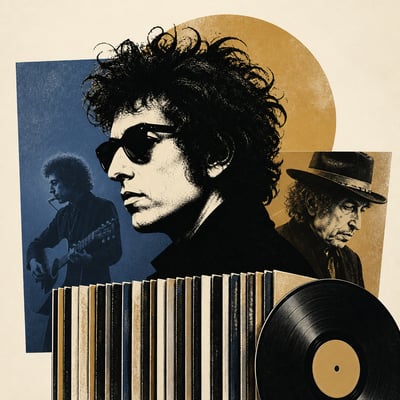
This topic centers on guide-style criticism of Bob Dylan's recorded catalog, especially studio albums, official live releases, and major box-set or archival material. The coverage consistently weighs landmark records against uneven periods, showing a career defined by frequent reinvention, recurring debate over quality, and sustained interest in both canonical and underrated releases. It matters because Dylan's catalog remains one of the most revisited in popular music, with each new guide or box set prompting fresh reassessment of earlier albums and eras.
First Article: 01/20/75
Latest Article: 02/23/26
Summary
- The dominant frame is album-by-album evaluation of Dylan's recorded work rather than news about a single release.
- Coverage repeatedly returns to major turning points: the 1960s electric breakthrough, the country and gospel eras, the 1980s decline, and the 1990s-to-2020 resurgence.
- Several pieces argue for reappraisal of albums once treated as weak or minor, especially Street-Legal, Empire Burlesque, Saved, and parts of the standards projects.
- Canonical records such as Bringing It All Back Home, Highway 61 Revisited, Blonde on Blonde, Blood on the Tracks, Oh Mercy, Time Out of Mind, and Rough and Rowdy Ways anchor the topic.
- Recurring tensions include authorship versus borrowing, studio polish versus raw performance, and whether later Dylan thrives through reinvention or repetition.
- The catalog is presented as unusually broad, including official live albums, bootlegs, covers, standards, and Christmas material alongside original studio albums.
History
The framing has shifted slightly from a general reassessment of Dylan’s catalog to a more reference-guide-oriented view that explicitly treats the work as ongoing and still being reshaped by new guides, reissues, and late-career releases. The update also broadens the catalog emphasis to include compilations and standards projects more explicitly.
The framing has broadened from general catalog reappraisal to a more specific emphasis on Dylan studies’ interpretive debates—especially authorship, borrowing, and plagiarism—while still centering late-career resurgence. The current version also foregrounds more collaborators and archival context, making the scholarship angle more explicit.
Featured
Timeline: 18663 Days
Hover over any logo to see coverage summary, click for full article.