
 Climate
 Privacy
 Bob Dylan
 Drones
 Data Centers
 AI Governance
 2026 Maine Senate Race
Bob Dylan Live And Farm Aid
Coverage from Peter Stone Brown Archives, CNN, and others
Articles
32
Active Days
5896
The Topic
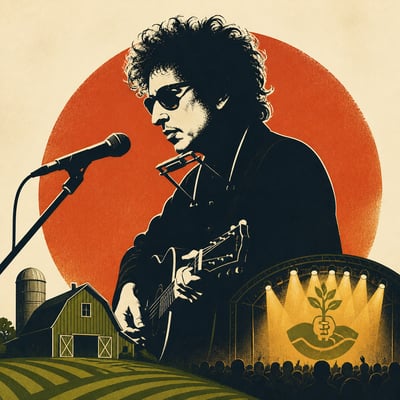
Recent coverage emphasizes Bob Dylan's late-career live performances, especially Farm Aid 40 and related benefit appearances, where he plays short, rearranged versions of older songs with distinctive piano-led backing and revised phrasing. A second strong thread revisits Farm Aid's origins in Dylan's 1985 Live Aid remark, while archival releases and historical reflections continue to frame his catalog as actively reinterpreted rather than fixed.
First Article: 06/03/10
Latest Article: 07/24/26
Summary
- Farm Aid 40 is the strongest current live-performance signal, with Dylan appearing in Minneapolis and delivering compact sets built around older songs.
- His late-career performances are described through arrangement changes rather than setlist novelty: piano-forward backing, altered phrasing, and tight, brief runs through familiar material.
- Maggie's Farm and other 1965-era songs remain key reference points, linking current appearances back to Dylan's electric transition and long-running protest-song image.
- The Farm Aid story remains tied to Dylan's 1985 Live Aid remark about farmers, making the festival both a current performance venue and a durable historical marker.
- Archival material continues to matter, especially The 1974 Live Recordings and Time Out of Mind Live, which present Dylan's live history as expandable and still under reassessment.
- Tom Petty and The Heartbreakers, Willie Nelson, Neil Young, and Tony Garnier recur as important collaborators or framing figures around Dylan's live work.
- The cluster mixes present-tense concert reporting with retrospective context, but the current signal is coherent rather than fragmented: live reinvention, benefit-concert legacy, and archival recovery all point in the same direction.
History
The update sharpens the live-performance thread around Farm Aid 40, making Dylan’s 2025 appearances the dominant current development. It also adds a somewhat clearer historical frame by tying the story more explicitly to specific archival releases and collaborators.
Featured
Timeline: 5896 Days
Hover over any logo to see coverage summary, click for full article.