
 Climate
 Privacy
 Bob Dylan
 Drones
 Data Centers
 AI Governance
 2026 Maine Senate Race
AI Surveillance And Targeting
Coverage from Matzav, Let's Data Science, and others
Articles
7
Active Days
120
The Topic
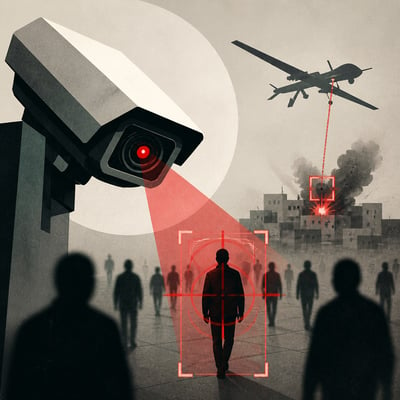
This topic centers on AI-enabled surveillance and targeting systems used to identify, track, and strike people across military conflict zones. The material focuses on how large-scale data collection from phones, cameras, drones, social media, and government databases is fused into threat profiles and target lists. It matters because these systems can accelerate lethal decision-making while raising concerns about misidentification, civilian harm, and the use of commercial AI tools in warfare.
First Article: 01/25/26
Latest Article: 05/24/26
Summary
- Israel’s military is described as using AI-driven systems to combine phone, camera, drone, social media, and database data into target profiles.
- Reporting repeatedly focuses on Ahmad Turmus as an example of how surveillance inputs were used to track and kill a suspected Hezbollah liaison.
- Another strand describes facial recognition and intercepted communications being used to build a classified list of Palestinians tied to the Oct. 7 attack.
- Commercial vendors and defense contractors appear in the chain, including Palantir’s Maven and Portland-based Sightline Intelligence’s shipments to Elbit Systems.
- The core tension is operational speed versus accuracy, with repeated concern that data-driven systems can create false positives and blur combatant-civilian distinctions.
- Several stories suggest long-running access to local data infrastructure and hacked networks helped enable the targeting pipeline.
- Public backlash appears around the technology supply chain, including protests over U.S. companies linked to Israeli military use.
History
This topic is new, but as new articles are added to it this area will summarize shifts, changes and expansions of the issues.
Featured
Timeline: 120 Days
Hover over any logo to see coverage summary, click for full article.