

Last Update: 06/03/2026 at 5:25 AM EST
California breach notification and PII rules
Coverage from Bibiyan Law Group, DeXpose, and others
Articles
4
Latest Article
05/06
Active Days
31
Executive Summary
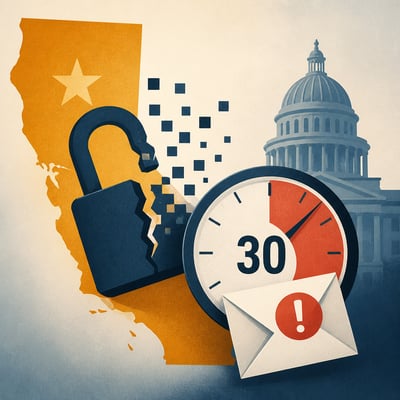
California privacy rules are tightening around breach notification timing, with SB 446 establishing a 30-day deadline and clearer notice requirements. The surrounding material also reinforces how broadly California defines protected personal and sensitive data, and how breach failures can trigger CCPA damages, attorney general reporting, and class-action exposure.
Key Points
- SB 446 replaces California’s open-ended breach notice standard with a fixed 30-day deadline from discovery.
- Notices now carry more detailed content requirements, including what happened, what data was involved, and what response steps are being taken.
- Large breaches still trigger California Attorney General reporting, public disclosure, and documentation requirements for limited delay exceptions.
- California’s privacy framework treats a wide range of identifiers, credentials, health information, and biometric data as protected or sensitive data.
- CCPA-related breach exposure remains a major enforcement channel, including statutory damages, cure periods, and class-action risk.
- The current material is mostly operational and legal guidance rather than a single disputed case, so the signal is coherent and policy-driven.
Featured Article
California SB 446, effective January 1, 2026, imposes a 30-day deadline for data breach notification to affected individuals and adds Attorney General notice timelines.
Coverage Timeline: 31 Days
Hover over any logo to see coverage summary, click for full article.
Additional Articles
⭐⭐⭐⭐⭐
California employers must notify affected people within 30 days of discovering covered workplace breaches under SB 446 starting Jan. 1, 2026.
California’s breach notification law now requires 30-day notices from discovery under SB 446, covering unencrypted personal information and AG reporting for large incidents.
⭐⭐⭐
California CCPA remedies allow consumers to pursue damages for security failures after written notice and a 30-day cure period.