
 Climate
 Privacy
 Bob Dylan
 Drones
 Data Centers
 AI Governance
 2026 Maine Senate Race
California Tightens Breach Notification Rules
Coverage from Bibiyan Law Group, Justia, and others
Articles
9
Active Days
77
The Topic
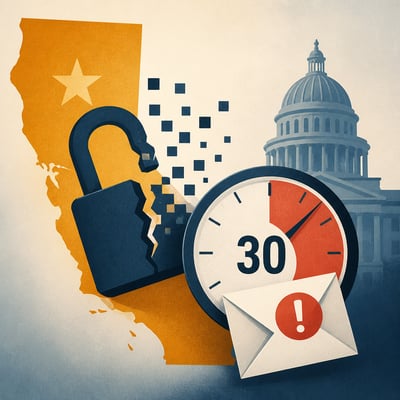
The topic centers on California requirements for notifying residents after unauthorized access to covered personal information, including identifiers, financial credentials, health information, login data, and biometrics. The material also emphasizes related CCPA/CPRA litigation, Attorney General reporting for larger incidents, and overlapping healthcare obligations under HIPAA and California medical confidentiality law. A broader regulatory pattern is visible: organizations are expected to identify qualifying incidents quickly, preserve evidence, and notify affected people and authorities within jurisdiction-specific deadlines rather than waiting for investigations to fully conclude.
First Article: 04/06/26
Latest Article: 06/21/26
Summary
- California notification duties generally focus on unauthorized access to specified unencrypted or unredacted personal information rather than any security incident.
- The supplied guidance describes a 30-day California notification deadline from discovery, alongside requirements for plain-language notices and Attorney General submissions for breaches affecting more than 500 residents.
- CCPA and CPRA claims may expose businesses to statutory damages when inadequate security contributed to qualifying data exposure.
- Healthcare incidents can trigger overlapping duties under California medical-information protections and HIPAA.
- Global and Indian frameworks add separate regulator and individual-notification clocks, including a 72-hour DPDP reporting period and a potentially earlier CERT-In deadline.
- Encryption, jurisdiction mapping, pre-drafted notices, evidence preservation, and rehearsed response procedures are recurring preparation measures.
History
The framing tightens from general personal-data breach handling to a more specific California notification regime centered on unauthorized access, while adding clearer overlap with HIPAA and California medical confidentiality rules. The current version also sharpens the timing picture by contrasting California’s 30-day standard with other jurisdictions’ faster clocks.
The story broadens beyond California into a more explicit multi-jurisdiction breach-compliance framework, adding India’s DPDP and CERT-In deadlines and sharpening the operational advice around immediate legal assessment and evidence preservation. It also slightly complicates the California picture by noting that one source still uses the older “without unreasonable delay” standard alongside the reported SB 446 30-day rule.
Featured
Timeline: 77 Days
Hover over any logo to see coverage summary, click for full article.