
 Climate
 Privacy
 Bob Dylan
 Drones
 Data Centers
 AI Governance
 2026 Maine Senate Race
Government Data Purchases And Surveillance
Coverage from The Guardian, AOL, and others
Articles
16
Active Days
902
The Topic
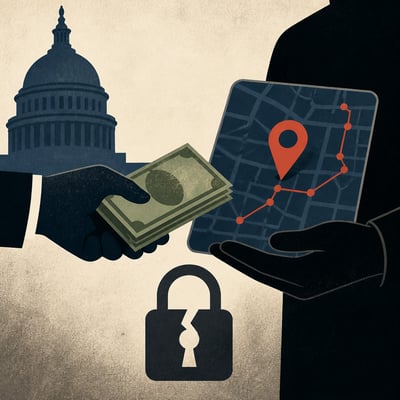
Federal agencies are buying commercially available personal data, especially location and tracking records, and that practice is driving renewed calls for warrant requirements and limits on surveillance by data brokers, ad-tech firms, and local camera systems. The strongest current thread is congressional pressure on the FBI and ICE over data purchases that may bypass normal Fourth Amendment protections. Recent proposals would restrict federal access to brokered data, limit retention, and tighten rules on biometric and surveillance-camera use. The topic is coherent and current, with most material reinforcing the same legal and operational dispute rather than fragmenting into separate subtopics.
First Article: 01/01/00
Latest Article: 07/26/26
Summary
- The dominant dispute is over whether federal agencies can buy personal data from brokers without a warrant.
- Location history is the most repeated data type, often described as coming from apps, browsers, and ad-tech tracking.
- The FBI remains the clearest focal point, with senior officials acknowledging resumed purchases of commercially available data.
- ICE and other federal buyers appear as reinforcing examples, especially where ad-tech and investigative use overlap.
- Congressional responses are converging around warrant requirements, tighter retention rules, and restrictions on broker purchases.
- Biometric and device-tracking tools, including license-plate readers and facial recognition, are part of the same privacy concern set.
- The recurring legal frame is the gap between direct government collection rules and third-party data markets.
History
The story broadens from an FBI-focused warrant fight into a wider federal surveillance and data-purchase dispute that now prominently includes ICE, biometric tools, and local camera systems. At the same time, the current version shows more concrete congressional pressure and a clearer push toward restrictive legislation on brokered data access and retention.
Featured
Timeline: 902 Days
Hover over any logo to see coverage summary, click for full article.