
 Climate
 Privacy
 Bob Dylan
 Drones
 Data Centers
 AI Governance
 2026 Maine Senate Race
Kansas City Bus Facial Recognition Plan
Coverage from PCMag, Yahoo, and others
Articles
28
Active Days
186
The Topic
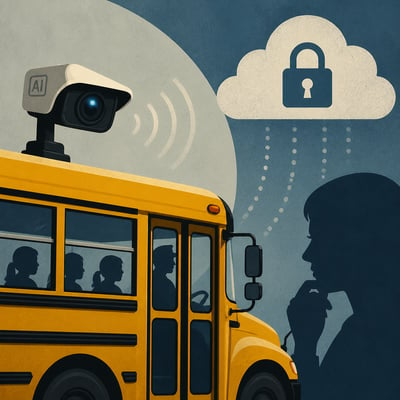
Kansas City, Missouri plans to deploy facial recognition cameras on some public buses to match captured images against active alerts involving banned riders, missing persons, or selected law-enforcement watch lists. SafeSpace Global says non-matching facial data would not be retained, while ordinary bus video could be stored for up to five years. The rollout has been delayed by technical and funding problems, including Missouri’s decision not to fund the facial-recognition component, while privacy advocates warn that a narrowly defined system could expand and reproduce errors or bias associated with earlier deployments.
First Article: 01/01/26
Latest Article: 07/05/26
Summary
- Kansas City intends to use facial recognition on some buses to check for banned riders, missing persons, and designated law-enforcement alerts.
- SafeSpace Global says facial images without a match would not be retained, while routine bus video could be archived for up to five years.
- The planned rollout has been delayed by Wi-Fi and deployment issues as well as the loss of Missouri state funding tied to privacy concerns.
- City and transit officials plan to use local and federal funds and have discussed expanding the pilot to as many as 30 buses.
- Privacy advocates argue that facial recognition aimed at live public spaces creates risks of scope expansion, false matches, and racial bias.
- Additional officers are being used at transit stops and centers while the technology remains pending.
History
The story is slightly more concrete and more cautionary: Missouri’s refusal to fund the facial-recognition component is now explicitly tied to privacy concerns, and the pilot’s potential scale has been widened to as many as 30 buses. The current framing also emphasizes advocates’ warning that even a narrow deployment could expand and repeat bias or error problems.
The story has sharpened from a broader concern about AI surveillance on transit into a more specific Kansas City bus deployment plan, with clearer details on the proposed uses, retention limits, funding setback, and rollout delay. The main new development is that the project is now framed as a contested, narrowly scoped biometric pilot rather than a general surveillance trend.
Featured
Timeline: 186 Days
Hover over any logo to see coverage summary, click for full article.