

Last Update: 06/03/2026 at 5:25 AM EST
Nigeria Interception Rules Under Challenge
Coverage from Arise, Chronicle.ng, and others
Articles
3
Latest Article
03/01
Active Days
9
Executive Summary
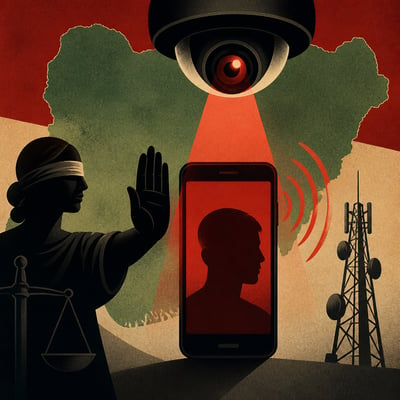
Civil society pressure is building against Nigeria's 2019 lawful interception rules, with critics arguing that broad phone surveillance powers lack adequate judicial oversight, transparency, and privacy safeguards. The issue is tightly linked to election-period concerns and the risk of monitoring journalists, critics, and voters.
Key Points
- Nigeria's 2019 lawful interception regulations are drawing direct challenge over broad surveillance powers and weak safeguards.
- The strongest criticism is that interception authority can be used without robust independent judicial oversight.
- Civil society warnings connect the surveillance framework to election-period risks, especially for journalists, critics, and opposition figures.
- The dispute is not about a single breach; it is about the legality and scope of a standing interception regime.
- Calls for reform emphasize transparent legislative process, necessity, proportionality, and clearer remedies for misuse.
- The signal is cohesive and current, with little historical drift and no major topic fragmentation.
Featured Article
SERAP urged Nigerian President Tinubu in February 2026 to withdraw LICR 2019 and pursue safeguards for privacy and electoral integrity.
Coverage Timeline: 9 Days
Hover over any logo to see coverage summary, click for full article.
Additional Articles
⭐⭐⭐
SERAP warns Nigeria's government seven days to rescind 2019 interception regulations amid fears of mass surveillance ahead of 2027 elections.
⭐️⭐️
SERAP urges Nigeria FCCPC to investigate major tech platforms for privacy abuses in February 2026.