History
07/23/20260 new articles
The story is now more explicit that ransomware economics are shifting toward multi-extortion and data suppression failures, not just data theft and lower payment rates. It also adds evidence that initial access brokers and named incidents are sustaining the operational and victim-pressure dimensions of the problem.
07/21/20261 new articles
The story now emphasizes that ransomware is not just about data theft and leak threats, but about a more fragmented extortion ecosystem where attackers prolong access, increase pressure on victims’ wider networks, and detection often happens only after theft. The new version also adds concrete operational examples from manufacturing and healthcare that show the business disruption and ambiguity around stolen-data claims.
- 85 active extortion groups were identified in 2025.
- Many organizations detect ransomware only after data theft.
- Blackfield claimed a ransomware attack against Nidec.
- Healthcare incidents can force paper-based clinical workflows.
- Attackers may contact customers or partners to increase leverage.
07/17/20265 new articles
The story has broadened from general ransomware trends to a more specific picture of an expanding extortion economy, with more active groups, higher ransom demands, and growing AI- and identity-based attack pressure. The updated version also places greater weight on operational weaknesses and defensive controls, not just payment declines.
- Total attack volume and median ransom demands have increased.
- AI-driven detection challenges are now part of the ransomware threat picture.
- Weak cloud configuration and delayed post-theft detection are cited as recurring weaknesses.
- Defensive guidance now emphasizes zero trust, MFA, DLP, and immutable backups.
- Insurance is newly named among the affected sectors.
05/11/2026Topic Formed
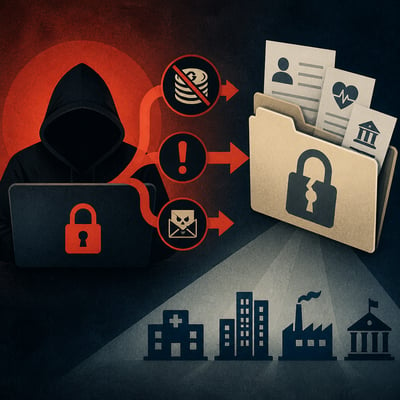
Ransomware activity is rising while payment rates fall, and attackers are relying more on data theft, extortion, and multi-stage pressure tactics. The main privacy impact is exposure of sensitive data across healthcare, business, manufacturing, and public-sector targets.

 Climate
 Privacy
 Bob Dylan
 Drones
 Data Centers
 AI Governance
 2026 Maine Senate Race