
 Climate
 Privacy
 Bob Dylan
 Drones
 Data Centers
 AI Governance
 2026 Maine Senate Race
Retail Facial Recognition Faces Legal Scrutiny
Coverage from San Francisco Chronicle, The New York Times, and others
Articles
26
Active Days
196
The Topic
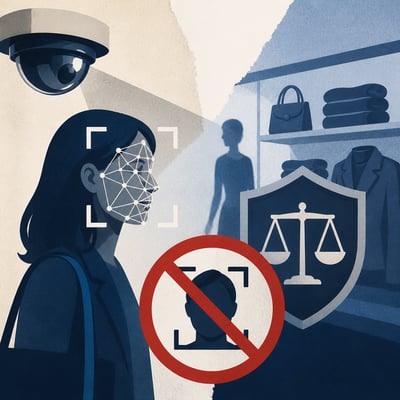
Retailers and venue operators in the United States and United Kingdom are expanding facial recognition systems to identify suspected shoplifters or exclude selected individuals, while courts and lawmakers are demanding greater transparency and limits on biometric collection. The technology’s use has prompted concerns about false matches, racial and demographic bias, privacy, data access, and the consequences of opaque watchlists. The New Jersey Supreme Court’s disclosure ruling illustrates a broader shift toward requiring organizations to explain how facial recognition contributed to consequential decisions.
First Article: 01/08/26
Latest Article: 07/22/26
Summary
- Grocery Outlet is deploying SAFR facial recognition at some Bay Area stores to identify suspected shoplifters.
- Sainsbury’s plans to expand Facewatch live facial recognition from more than 55 stores to as many as 200 UK locations by the end of 2026.
- A reported false match at a London Sainsbury’s store highlights the risk of mistaken exclusion and public humiliation.
- Syracuse lawmakers are considering a business biometric-surveillance ban, while Onondaga County adopted disclosure and data-profit restrictions.
- New Jersey’s Supreme Court ordered prosecutors to disclose core information about facial recognition used in a criminal investigation, including the software, error rates, and probe images.
- Disputes over facial recognition at Madison Square Garden show how biometric screening can intersect with venue access and licensing rules.
- Retailers and vendors describe the systems as targeted and theft-prevention tools, while privacy advocates warn that they scan people who are not suspected of wrongdoing.
History
The main change is a stronger emphasis on formal disclosure and oversight: New Jersey’s court order now specifically requires prosecutors to reveal how facial recognition was used, and New York lawmakers added a local disclosure/data-profit restriction in Onondaga County. The story also broadens slightly from retail use to venue access disputes at Madison Square Garden.
The story adds a sharper enforcement and implementation angle: retail facial recognition is moving forward in more places, while courts and lawmakers are actively tightening disclosure and use limits. The biggest new wrinkle is the combination of expansion, a reported false match, and a court order demanding more transparency about criminal-use software.
Featured
Timeline: 196 Days
Hover over any logo to see coverage summary, click for full article.