
 Climate
 Privacy
 Bob Dylan
 Drones
 Data Centers
 AI Governance
 2026 Maine Senate Race
World Cup Scams Target Fans
Coverage from BleepingComputer, The Record, and others
Articles
5
Active Days
55
The Topic
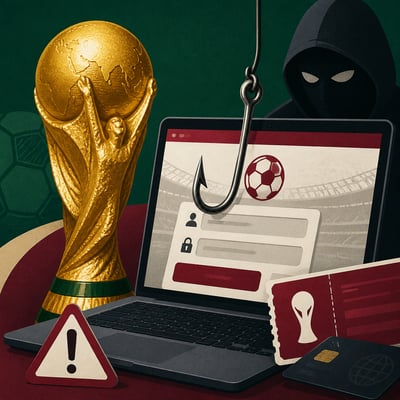
Threat actors are using FIFA World Cup 2026 branding to create fake ticketing, hospitality, merchandise, travel, employment, and streaming services that capture credentials, payment details, and other personal information. Researchers identified thousands of related domains, including a large network of FIFA lookalike sites, while authorities warned consumers and seized or blocked illicit streaming infrastructure. The activity matters because heightened demand and distributed online purchasing create opportunities for both direct financial fraud and follow-on account compromise affecting fans, staff, and event partners.
First Article: 05/28/26
Latest Article: 07/21/26
Summary
- Researchers identified more than 4,300 fraudulent FIFA-related domains, including over 300 active sites linked to a major ticket-phishing operation.
- FortiGuard Labs reported more than 13,000 World Cup-themed domain registrations from January through May, with 8.8% flagged as malicious.
- Fake sites imitate FIFA login and ticketing flows, collect payment or identity data, and may enable account takeover or resale of legitimate tickets.
- Scammers are reaching fans through search advertising, social media, Telegram, resale channels, and other online marketplaces.
- Threats also target event staff and organizations through fake employment portals, adversary-in-the-middle phishing, MFA-reset schemes, and fraudulent invoices.
- U.S. and international authorities seized or blocked thousands of domains associated with unauthorized World Cup streaming and related malware risks.
History
The story is now more specific and operationally concrete: it quantifies the fake-domain network, identifies a major ticket-phishing operation, and adds broader evidence of malicious domain registrations. The enforcement side also sharpens, with streaming takedowns tied to malware risks rather than just piracy.
The story has broadened from fan-targeted ticket fraud into a wider World Cup 2026 cybercrime ecosystem that now includes staff, partners, broadcasters, and service-provider targeting, plus enforcement actions against illegal streaming operations. The updated version also adds a named threat operation, GHOST STADIUM, and reframes the scale as thousands of fraudulent domains rather than hundreds.
Featured
Timeline: 55 Days
Hover over any logo to see coverage summary, click for full article.