AI Governance
 Data Centers
 Drones
 Climate
 Privacy
 2026 Maine Senate
 Bob Dylan
AI Regulatory Federalism
The ongoing major issues seen in articles and topics over time.
The Drivers
5
Articles Related
202
The Big Picture
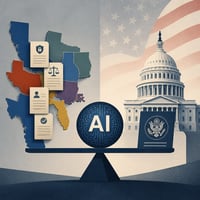
The enduring struggle over which level of government should set AI rules, how state laws coexist with federal frameworks, and whether national preemption should override local experimentation. This issue includes political and institutional contests over AI rulemaking, including state attorney general authority, lobbying, campaign spending, super PAC activity, and elections shaped by state AI legislation.
AI governance will remain unstable if companies face divergent obligations across states while federal institutions lack durable statutory authority. The balance between state experimentation and national uniformity will shape compliance costs, innovation strategy, civil-rights protections, and enforcement power.
Categories
Legislation & Regulatory Policy, Enforcement, Liability & Litigation, Corporate AI Governance, Sector-Specific AI Regulation
Keywords
AI bill lobbying, AI campaign finance, AI industry political spending, AI law preemption impasse, AI Litigation Task Force, AI model development preemption, AI primary, AI regulation primary election, AI super PAC, American Mission PAC, Anthropic state AI laws, BEAD funding AI preemption, Colorado AI law reenactment, Colorado AI law rewrite, companion chatbot state laws, Connecticut AI law, federal AI baseline, federal AI governance office, Great American AI Act, Guardrails Alliance, Illinois frontier AI audits, Illinois SB 315, Leading the Future PAC, national AI framework, New York RAISE Act, OpenAI federal framework, Public First PAC, RAISE Act, reverse federalism, state AI bill lobbying, state AI law moratorium, state AI law preemption, state AI laws mid-2026, state AI patchwork, state AI preemption backlash, state AI safety audits, state frontier AI law, state frontier AI safety laws, state frontier model safety law, state lawmakers AI preemption letter, statehouse AI lobbying, tech-backed AI election spending, temporary AI preemption, three-year AI preemption
The Drivers
The Topics below, and their articles, all focus on, exemplify, or help to explain this theme.
Primary
- 98
U.s. AI Preemption Versus State Rulemaking
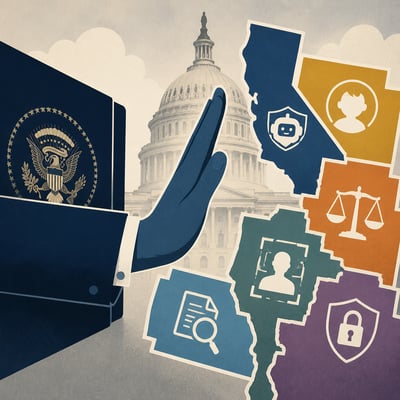
U.S. states continue expanding targeted AI rules while the White House and congressional allies pursue federal preemption and a more uniform national framework. State measures increasingly address child-facing chatbots, consequential automated decisions, frontier-model safety, synthetic-media provenance, healthcare, employment, and data-center impacts. Congress has not produced a comprehensive federal statute, leaving executive actions, voluntary standards, procurement rules, agency proposals, and state attorneys general enforcement to shape near-term obligations.
Articles: 47
Last Updated: 09/04/2026
- 97
AI Industry Battles Over U.s. Rules
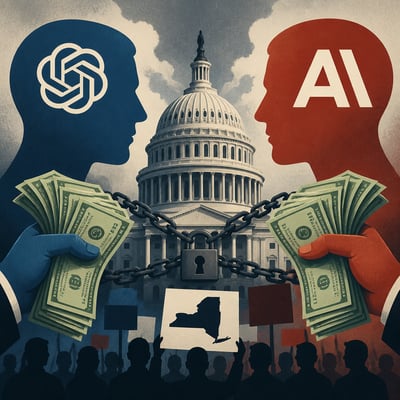
U.S. AI governance is increasingly contested through elections, super PACs, lobbying, and state-level legislation. The strongest current pattern is an industry-backed fight over federal preemption versus state safeguards, with safety reporting, transparency, child protection, export controls, and frontier-model review as recurring policy levers. Federal legislative gridlock keeps the issue ongoing and shifts activity toward statehouses and campaigns, while spending totals and their effect on legislation remain difficult to compare.
Articles: 63
Last Updated: 09/11/2026
- 97
U.s. AI Regulation Fragments Across States
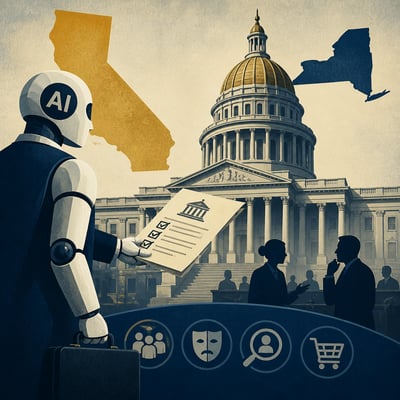
U.S. AI governance is advancing through state-level bills and targeted safeguards for transparency, child safety, employment, healthcare, and incident reporting. California and New York provide the clearest examples, while divergent industry lobbying and limited federal action leave the national framework fragmented.
Articles: 11
Last Updated: 07/28/2026
- 94
AI Donors Turn Primaries Into Battlegrounds
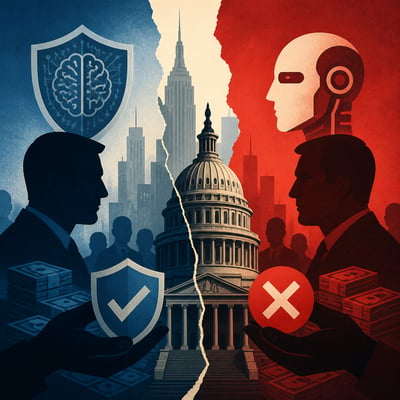
AI companies, investors, and aligned political groups are spending heavily in U.S. primary elections to influence candidates and policy debates over AI regulation. The most prominent fight centers on New York Assemblyman Alex Bores and the state’s RAISE Act, which imposes safety reporting and incident-disclosure duties on major frontier AI developers, while related spending has shaped Utah races around safeguards, infrastructure, and federal oversight. The contests show that AI regulation is becoming an electoral issue and that disagreements within the technology industry increasingly involve whether states or Congress should set the rules.
Articles: 24
Last Updated: 07/15/2026