AI Governance
 Data Centers
 Drones
 Climate
 Privacy
 Bob Dylan

Climate Quick Briefing
2026-11-14
Clean-Power Ambition Outpaces Evidence of Reliable Delivery
of Play
The prior assessment of infrastructure-constrained decarbonization remains intact. New German modeling adds support for the reliability challenge, while reporting on India illustrates the scale of investment needed to turn capacity ambitions into usable power. Neither establishes a change in emissions trajectory. Adaptation affordability and the scope of climate litigation also remain consequential but unresolved.
What's New?
Clean-power ambitions remain constrained by delivery infrastructure
India’s grid has already curtailed renewable generation, while coal supplied about 71% of its electricity in 2025. More broadly, the existing grid-delivery concern remains: capacity targets do not by themselves establish reliable clean generation or fossil-power displacement.


Adaptation costs are substantial, but protection outcomes remain uncertain
California regulators authorized $40 billion in wildfire-related cost recovery for 2019–2024, much of it for mitigation and largely borne by ratepayers. Insurance disparities add to affordability concerns, but the available evidence does not establish how much protection the spending delivered.
What's Changed?
German modeling adds detail to the reliability constraint
An exploratory simulation found that scaling wind and solar alone did not eliminate modeled low-wind, low-solar shortages; a hybrid design used batteries, hydrogen storage and dispatchable turbines. This strengthens the earlier infrastructure assessment, but is not evidence of deployed capacity or a definitive prescription for Germany.
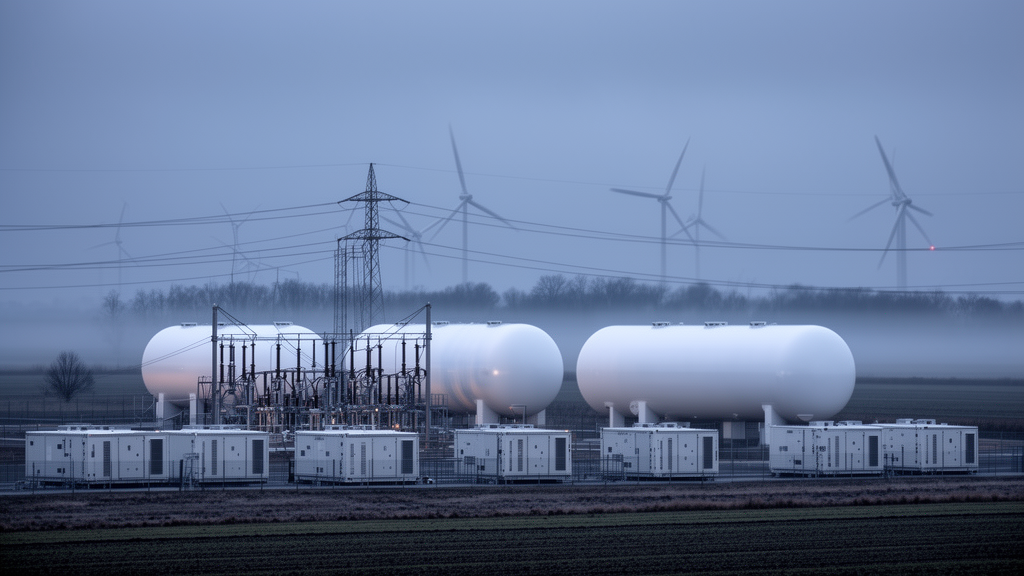
India reporting clarifies the scale of the delivery challenge
India’s 900-GW non-fossil capacity goal for 2035 is accompanied by nearly $20 billion approved for transmission and battery storage. The goal was announced in late September, so the new report should not be mistaken for a policy announcement today; it makes the existing connection between ambition and grid investment more concrete.
What Matters?
Annual renewable capacity is not the same as reliable supply
The German simulation reinforces the need to judge clean-power plans against seasonal reliability as well as annual generation. Its exact capacity estimates are uncertain: the study excluded curtailed generation, which the authors say inflated calculated renewable scaling, and its closed-system assumptions are not a general forecast.
Grid investment matters most if it changes fossil generation
India’s approved spending addresses a known bottleneck, but neither the investment nor the 2035 target establishes delivered emissions reductions. The consequential test is whether connected clean generation reduces curtailment and displaces coal rather than merely meeting additional demand.
What's Next?
Track connected clean power and coal displacement
Watch whether India’s transmission and storage funding produces completed infrastructure, lower curtailment and reduced coal generation. Those outcomes would strengthen the case that capacity ambitions are translating into decarbonization.
Test adaptation spending against protection and affordability
The existing California watchpoint remains unresolved: evidence of lower ignition risk and manageable customer bills would clarify whether wildfire mitigation spending is delivering value.
Clarify the climate-liability case’s procedural status
The prior question about Supreme Court action and federal preemption remains unresolved. A verified procedural update or ruling would clarify the prospects for state-law climate damages claims; the supplied current evidence does not establish an outcome.