
 AI Governance
 Data Centers
 Drones
 Climate
 Privacy
 Bob Dylan

Climate: Featured Story
Coverage from Canary Media, Planet Detroit, and others
Ann Arbor Plans Michigan’s First Residential Virtual Power Plant
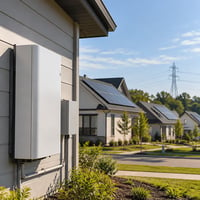
Veridian at County Farm in Ann Arbor plans to begin Michigan’s first residential virtual power plant pilot in the coming weeks. DTE Energy would remotely dispatch participating homes’ batteries to send stored solar power to the grid during periods of high demand. The pilot will test whether coordinated home storage can support reliability and reduce the need for costly grid upgrades or fossil-fuel peaker plants; customer compensation details have not been disclosed.
If you read one thing
Canary Media’s master coverage introduces the planned pilot, DTE’s role and the open question of customer compensation.
The evidence
Planet Detroit adds the projected participation and output figures, plus context on how the pilot is intended to test the model.
The pilot is described as forthcoming, with enrollment expected to begin in the coming weeks. Its planned scale and purpose are outlined, but its grid benefits and customer compensation have not yet been established.
DTE expects nearly 100 battery-equipped homes to participate; the pilot is projected to provide up to about 300 kilowatts for three hours. Sonnen USA is supporting operations with its software.
The pilot is intended to test whether coordinated home batteries can support reliability and reduce the need for grid upgrades or fossil-fuel peaker plants; coverage does not establish that these benefits will result.
Residents may be compensated for participation, but DTE had not provided exact compensation figures in the reported coverage.
Nearly 100 homes
DTE expects nearly 100 battery-equipped homes at Veridian to participate in the pilot.
Up to about 300 kilowatts for three hours
The pilot is expected to be able to deliver this much power for this duration; it is a projected capacity, not a reported operating result.
44 of 120 planned market-rate homes
Thrive Collaborative said 44 market-rate homes with solar and batteries had been built, out of 120 planned.
50 affordable housing units
Thrive Collaborative said 50 affordable units had been built; the article notes they did not yet have batteries.
About 7,900 homes and businesses
Reported participation in the Sonnen-supported Wattsmart Battery program across Utah, Wyoming and Idaho; this is a separate program cited as a precedent, not the Veridian pilot.
Contested Issue
Whether DTE needs a cautious pilot before scaling a residential virtual power plant
RMI’s Kevin Brehm questions whether utilities need another pilot, arguing that existing VPP programs offer models and that utilities could move more decisively.
Sonnen USA’s Geoff Ferrell describes Veridian as a test bed that can show DTE how much power the battery fleet can deliver and help inform a larger program.
Canary Media first described Veridian at County Farm as planning Michigan’s first residential virtual power plant pilot, with DTE set to dispatch stored solar power from participating homes’ batteries during periods of grid strain. It framed the pilot as a test of reliability and potential alternatives to grid upgrades and fossil-fuel peaker plants, while noting that customer compensation details were unavailable. Later coverage largely repeated that planned approach and its expected scale—nearly 100 homes and up to about 300 kilowatts for three hours—rather than reporting that the pilot had launched or presenting results. These later accounts also pointed to Sonnen’s software support and a Utah battery program as context.
- 11-18-2026
Canary Media reported that Veridian households could enroll in the planned pilot in the coming weeks, with DTE remotely dispatching home batteries to supply the grid. It described reliability and cost reduction as goals and said exact customer compensation had not been disclosed.
- 11-21-2026
Grist published coverage describing the planned pilot, including expected participation by nearly 100 homes, potential delivery of up to 300 kilowatts for three hours, and Sonnen USA’s software support.
- 11-22-2026
Michigan Advance published a brief account identifying Veridian as a fossil-fuel-free, net-zero community whose homes use solar generation and batteries; the supplied article text gives little further detail about the pilot.
- 11-24-2026
Planet Detroit reported on the planned DTE pilot, repeating the expected participation and capacity figures and describing the project as a test of how the home-battery fleet could operate.
- 11-25-2026
The Energy Mix published coverage describing the planned pilot and its expected scale, along with the stated aims of testing grid support and the potential to reduce reliance on costly upgrades and peaker plants.