
 AI Governance
 Data Centers
 Drones
 Climate
 Privacy
 Bob Dylan

Climate: Featured Story
Coverage from India Times, Free Press Kashmir, and others
Cabinet Approves ₹14,500 Crore Grid Storage Scheme
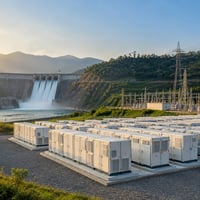
India’s Union Cabinet approved a ₹14,500 crore viability-gap funding scheme to support 92 GWh of new grid-scale energy storage capacity between FY 2026–27 and FY 2030–31. The plan allocates 60 GWh to pumped hydro, 30 GWh to battery storage, and 2 GWh to alternative technologies, with projects expected to attract about ₹97,600 crore in total investment. Battery projects must meet a 40% domestic-content requirement. The scheme is intended to improve renewable integration and grid reliability, while its delivery and contribution to domestic manufacturing remain to be demonstrated.
If you read one thing
The master article explains the scheme’s design and why its effect will depend on project delivery, economics and domestic supply chains.
Best explainer
A concise account of the approved capacity mix, bidding process and 40% domestic-content rule.
The evidence
Adds context on the projected storage requirement and reported operational battery capacity.
The funding scheme and its broad design have been approved, but the coverage does not establish that projects have been awarded or capacity commissioned. Execution, project economics and the domestic supply chain are identified as unresolved tests.
The approved target is 92 GWh: 60 GWh of pumped hydro, 30 GWh of battery storage and 2 GWh of alternative technologies, supported by an estimated ₹97,600 crore in total investment.
Capacity is to be allocated through tariff-based competitive bidding. Battery projects must meet a minimum 40% domestic-content requirement, linking the funding to an effort to expand local manufacturing.
The scheme is intended to help shift surplus renewable electricity to periods of higher demand and improve grid flexibility. Coverage also cites a projected national storage requirement of 411 GWh by 2031–32, so the approved capacity would address only part of that need.
Whether the plan delivers on schedule and strengthens domestic manufacturing remains uncertain. Reporting points to project financing and construction hurdles, alongside dependence on imported battery cells and processed minerals, as constraints.
₹14,500 crore
Union Cabinet-approved viability-gap funding for the grid-scale storage scheme.
92 GWh
New grid-scale storage capacity the scheme aims to support from FY 2026–27 through FY 2030–31.
60 GWh
Planned pumped-storage hydropower capacity under the scheme.
30 GWh
Planned battery energy storage capacity under the scheme.
2 GWh
Capacity allocated to alternative energy storage technologies.
₹97,600 crore
Estimated total investment expected for projects supported by the scheme.
40%
Minimum domestic-content requirement for battery energy storage projects supported under the scheme.
411 GWh by 2031–32
The government’s projected requirement for grid-scale energy storage; the approved scheme is intended to contribute toward this need.
Initial coverage on November 4 reported Cabinet approval of ₹14,500 crore in viability-gap funding for 92 GWh of grid storage, divided among pumped hydro, batteries and alternative technologies. Follow-up reports on November 5 and 6 filled in the proposed competitive-bidding process, the 40% domestic-content requirement for battery projects and the expected investment. Later coverage explained how storage could help balance variable renewable generation and placed the plan against India’s larger projected storage requirement. By November 8, reporting also described earlier funding rounds and falling battery-storage tariffs, while noting execution challenges. November 16 coverage sharpened the unresolved questions: whether projects can be delivered economically and on time, and whether domestic manufacturing and mineral processing can reduce reliance on imported battery supply chains.
- 11-04-2026
Reports announced Cabinet approval of ₹14,500 crore in viability-gap funding for 92 GWh of grid-scale storage, including 60 GWh of pumped hydro, 30 GWh of batteries and 2 GWh of alternative technologies. Coverage also described the 40% domestic-content requirement for battery projects and the scheme’s renewable-integration aims.
- 11-05-2026
Follow-up coverage set out the expected investment of ₹97,600 crore and explained that capacity would be allocated through tariff-based competitive bidding. It also connected the battery-content rule to domestic manufacturing and reported a separate approval for support to lithium and nickel processing plants.
- 11-06-2026
Coverage reiterated the funding period, capacity mix and investment estimate, and described the scheme’s intended role in renewable-energy use and power-system flexibility. It further explained that distribution companies could qualify for support for battery and pumped-hydro projects, while alternative-technology projects could involve public or private entities.
- 11-08-2026
An explanatory report placed the scheme alongside earlier storage-funding rounds and reported a decline in battery-storage tariffs found through bidding. It also highlighted delivery risks, including pumped-storage construction and clearances, and the challenge of meeting the domestic-content requirement as local cell capacity develops.
- 11-09-2026
Coverage set the plan against a projected need of 411 GWh of grid-scale storage by 2031–32 and reported that 9.1 GWh of battery storage was operational by September 2026. It emphasized the gap between planned capacity and the broader storage requirement, as well as the scheme’s stated links to renewable integration and energy security.
- 11-16-2026
Later analysis focused on whether the funding can translate into viable, commissioned projects and meaningful domestic manufacturing. It identified financing and construction constraints and described dependence on imported battery cells, components and mineral processing as a strategic challenge for the scheme’s domestic-manufacturing ambitions.
Articles in this story are part of a shaping these topics.