
 AI Governance
 Data Centers
 Drones
 Climate
 Privacy
 Bob Dylan

Climate: Featured Story
Coverage from African Sustainability Matters, Nairobi Wire, and others
Kenya, Singapore Sign Carbon Trading Deal
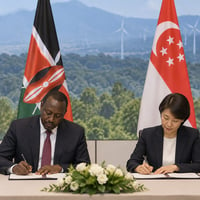
Kenya and Singapore signed an agreement at COP31 to establish a framework for authorizing and transferring carbon credits under Article 6.2 of the Paris Agreement. It is intended to connect eligible Kenyan mitigation projects with Singaporean demand while requiring accounting safeguards against double counting. The agreement may create an additional channel for investment, but its results will depend on implementation, project eligibility, oversight, and benefit-sharing.
If you read one thing
Explains how the Article 6.2 deal could work, including its adaptation-funding provisions and the safeguards and benefit-sharing issues that will shape its results.
The evidence
Clarifies that the agreement is legally binding and explains the corresponding-adjustment rule against double counting.
Best explainer
Sets out Kenya’s stated next implementation steps, from forming a joint committee to identifying eligible projects and methods.
The agreement is signed, and its framework includes authorization, transfer and accounting provisions. Project eligibility, operating procedures and oversight still need to be put into practice; the coverage presents investment and community benefits as potential outcomes, not established results.
The legally binding implementation agreement was signed during COP31 on November 16, establishing a bilateral framework for generating and transferring credits under Article 6. Singapore says corresponding adjustments are required to prevent double counting.
Kenya’s next stated steps include setting up a joint committee, agreeing project-approval and authorization procedures, identifying eligible methodologies and strengthening registry and reporting systems. The coverage does not establish that these steps are complete or that credit transfers have begun.
The agreement provides for Singapore to direct 5 percent of proceeds from authorized credits to adaptation in Kenya and for 2 percent of adjusted credits to be cancelled at first issuance. These provisions depend on authorized credits being issued.
Whether the deal attracts investment and delivers benefits to local communities remains uncertain. Coverage identifies project eligibility, credible accounting, regulatory oversight and benefit-sharing as important conditions for results.