
 AI Governance
 Data Centers
 Drones
 Climate
 Privacy
 Bob Dylan

Climate: Featured Story
Coverage from Rfi, Scripps News, and others
Meta Reconsiders 2030 Net-Zero Target Amid AI Buildout
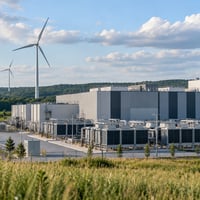
Meta said in its 2026 sustainability report that it is reassessing the timeline, sequencing and interim milestones for its value-chain net-zero goal, including its 2030 target. It reported that net emissions rose about 45% in 2025, attributing pressure in part to AI infrastructure growth; one report also cites delays in clean-energy connections and constraints on low-carbon materials. Meta has not announced a revised deadline, and reported emissions totals vary slightly across accounts.
If you read one thing
A concise account of Meta’s review, the 45% rise in reported net emissions and the absence of a replacement deadline.
Best explainer
Explains the value-chain targets, emissions sources, and reported clean-energy and supply-chain constraints in detail.
The evidence
Adds reporting on clean-power contracts, the portion producing electricity, and possible natural-gas use.
The review is underway, but Meta has not said what target changes it may make or when it will decide. Coverage consistently reports a sharp increase in net emissions, while some accounts give slightly different totals or distinguish net from location-based emissions.
Meta reported net emissions of about 11.8–11.9 million metric tons of CO2e in 2025, up 45% from the prior year. One account separately reports 21.7 million metric tons for location-based emissions, a different accounting measure.
The reassessment covers the 2030 value-chain goal and interim milestones, but Meta has not announced a replacement deadline or a decision timetable.
Coverage attributes much of the emissions increase to AI-related data-center construction and supply-chain sources, including purchased goods and capital equipment. Meta’s report also cites delays connecting clean-energy projects to the grid, permitting and transmission constraints, and limited supplies of low-carbon materials.
Meta has contracted more than 30 gigawatts of clean power, but reporting says about 12 gigawatts are producing electricity so far. Coverage also says the company may use natural-gas generation to meet near-term power needs; the full emissions impact of such projects is not reflected in the 2025 figures.
2030
Year of Meta’s value-chain net-zero goal, set in 2020; the company is reassessing its timeline and interim milestones, but has not announced a replacement deadline.
11.8 million metric tons of CO₂-equivalent; up 45% in 2025
Meta’s reported net emissions, as reported by most coverage; the increase was attributed in part to AI infrastructure growth.
11.9 million metric tons of CO₂-equivalent
Trellis reported this figure for Meta’s 2025 net carbon footprint, slightly above the 11.8 million reported by most other coverage.
21.7 million metric tons of CO₂-equivalent
Trellis reported this as Meta’s 2025 location-based emissions inventory, distinguishing it from the net footprint that includes contractual instruments.
About 99%
Share of Meta’s reported emissions attributed to Scope 3 in 2025, according to 24/7 Wall St.; that article said capital goods accounted for 73% of the footprint.
35%
Increase in Meta’s electricity use in 2025 as new data centers came online, according to coverage of the sustainability report.
Contested Issue
Meta’s reported 2025 net emissions total differs slightly across accounts.
Several reports put Meta’s 2025 net emissions at 11.8 million metric tons of CO₂e.
Trellis reports a 2025 net carbon footprint of 11.9 million metric tons of CO₂e.
Coverage began on November 19 with accounts of Meta’s 2026 sustainability report: the company was reassessing the timing, sequencing and interim milestones of its value-chain net-zero goal, including the 2030 timeframe, after reporting a 45% rise in 2025 net emissions. Those initial reports connected the review to the infrastructure needed for AI and noted that Meta had not announced a replacement deadline. On November 20, coverage added detail on the pressures behind the reassessment, including data-center construction, supply-chain emissions and delays in connecting clean-energy projects to the grid; some accounts also described constraints on low-carbon materials. Reporting emphasized that the review was not a declared cancellation or a settled change to the goal. A November 21 analysis focused on the implications of the reported emissions and Meta’s AI-related expansion. Across coverage, the central development remained a review without a published revised deadline; reported emissions totals were not entirely uniform across accounts.