
 AI Governance
 Data Centers
 Drones
 Climate
 Privacy
 Bob Dylan

Climate: Featured Story
Coverage from WBNG, SightLine | U308, and others
New York Unveils 5-Gigawatt Nuclear Plan
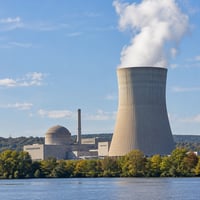
New York Gov. Kathy Hochul unveiled a 30-point Advanced Nuclear Master Plan in Rochester, setting a goal of adding 5 gigawatts of nuclear capacity over the coming decades. The roadmap covers potential sites, workforce preparation, supply chains, regulatory review, and commercial viability; the New York Power Authority is pursuing an initial 1 gigawatt. The proposal has drawn opposition over cost, ratepayer impacts, safety, waste, and the choice to invest in nuclear rather than renewables, while specific project locations, schedules, and financing remain unsettled.
If you read one thing
A concise overview of the 30-point roadmap, its 5-gigawatt target, and the Power Authority’s initial 1-gigawatt effort.
Best explainer
Details the financing proposals and disputes, possible host communities, projected grid needs, and unresolved waste and Indigenous-community concerns.
The evidence
Reports how state officials describe host-community engagement and records opponents’ concerns about costs, environmental impacts, and renewables.
Latest development
Adds later coverage on the projected 2033 supply shortfall, estimated public support costs, and the still-unselected site and reactor design.
The state has a broad development roadmap, but the coverage does not establish a selected site, reactor design, construction schedule, or settled financing approach. Initial planning and regulatory consideration are underway, while costs and community concerns remain contested.
The plan sets a 5-gigawatt goal, while the New York Power Authority is pursuing an initial project of at least 1 gigawatt. Eight communities have expressed interest in hosting projects and 10 developers have been qualified, but the state has not selected a host or technology.
A state analysis estimated public support for the 5-gigawatt buildout could total roughly $15 billion to $24 billion over the plants’ first 25 operating years. How projects would be financed remains unsettled; a Department of Public Service policy paper recommends approaches to commercial viability and ratepayer cost control, which the Public Service Commission has yet to resolve.
The grid operator projects electricity supply shortfalls beginning in 2033, with New York City potentially facing a shortfall earlier. Coverage also notes that proposed reactors would take years to plan and build, so the plan’s timing does not establish that new nuclear capacity will address those projected needs.
Opponents have challenged the proposed public spending and ratepayer exposure and raised concerns about safety, radioactive waste, and diverting investment from renewables. The coverage documents those objections but does not establish a final decision on project locations, financing, or community acceptance.
5 gigawatts (GW)
The Advanced Nuclear Master Plan’s target for new nuclear capacity in New York over the coming decades.
At least 1 GW
The initial upstate nuclear development phase being pursued by the New York Power Authority.
3.4 GW currently; 8.4 GW combined
WBNG reports that the proposed 5 GW would add to New York’s existing 3.4 GW of nuclear capacity, for 8.4 GW in total.
About $15.4 billion to $23.9 billion over the plants’ first 25 years of operation
A June state options paper estimated this range for support programs for 5 GW of new nuclear capacity; the figure is an estimate, not a finalized funding commitment.
About 225 megawatts in 2033, growing to more than 1,850 megawatts by 2036
MLQ reports the New York Independent System Operator’s projection of a statewide electricity supply shortfall.
About 10 years on average
Gov. Kathy Hochul said this is the average time to build a reactor, including about seven years in federal review; opponents quoted in coverage put the minimum at 10 to 15 years.
Contested Issue
Whether the proposed nuclear buildout would lower electricity costs or leave taxpayers and ratepayers paying for expensive projects
The state’s master-plan analysis projects that 5 gigawatts of new nuclear could reduce electricity costs by $28 billion to $31 billion through 2040, and Hochul said she would use cost controls to prevent overruns.
Critics say public subsidies and construction costs could increase bills; the state analysis cited in coverage estimated up to roughly $24 billion in public support, and opponents argued the money should not be charged to taxpayers and ratepayers.
Whether New York should prioritize nuclear power for reliable, round-the-clock electricity or direct investment toward renewables instead
Hochul argued nuclear provides stable, emission-free power that can help keep the lights on as electricity demand grows; a Republican Assembly energy committee member also argued that intermittent solar cannot provide the firm baseload power the state needs.
Environmental advocates argued that investing in new nuclear diverts public money from renewables such as wind, solar, and battery storage, which they say should be prioritized to cut costs and decarbonize the grid.
Coverage began with the state’s announcement of a 30-point roadmap targeting 5 gigawatts of new nuclear capacity, alongside an initial New York Power Authority effort of at least 1 gigawatt. Early reporting described plans to address potential sites, workforce preparation, supply chains, community engagement and regulatory review, while also noting opposition over cost, waste, safety and prioritizing nuclear over renewables. Later coverage put more emphasis on the financing debate and grid reliability: state estimates put potential public support in the billions, critics warned of ratepayer burdens and lengthy construction, and reporting highlighted projected supply shortfalls before most proposed reactors could be operating. Sites, reactor designs, licensing, project schedules and financing remained unsettled in the coverage.