
 Climate
 Privacy
 Bob Dylan
 Drones
 Data Centers
 AI Governance
 2026 Maine Senate Race
Carbon Removal Faces Capacity and Fairness Limits
Coverage from EurekAlert!, Earth.Org, and others
Articles
3
Active Days
2
The Topic
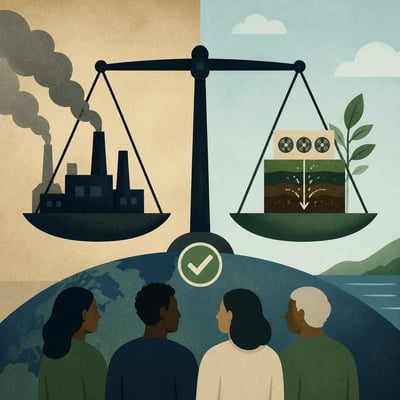
Carbon dioxide removal is being considered alongside emissions cuts because residual emissions may need to be balanced to meet long-term temperature goals. The material emphasizes that sustainable removal capacity is limited and that unequal access to removal technologies and underground storage could shift climate burdens toward less-resourced countries. It also highlights concerns that voluntary carbon markets may enable continued pollution without stronger rules, measurement, and accountability.
First Article: 03/26/26
Latest Article: 03/27/26
Summary
- A University of Graz study argues that carbon-removal rights should be allocated as fairly as emissions budgets.
- The study estimates that sustainable long-term annual removal capacity is below 10% of current annual greenhouse-gas emissions.
- A stylized country model shows that control of underground storage and larger emissions claims can sharply increase one country’s removal share at another’s expense.
- Carbon removal includes afforestation, soil practices, biochar, enhanced weathering, direct air capture, and other nature-based and engineered approaches.
- Voluntary carbon markets are attracting corporate buyers, but critics question whether credits can prolong pollution or increase corporate climate ambition.
- Scaling removal to very large volumes is expected to take time, reinforcing the need for emissions reductions and clearer rules.
History
The story is largely stable, but the framing has shifted toward residual-emissions balancing and away from broader concerns about financing, measurement barriers, and advance commitments. It also newly emphasizes that voluntary carbon markets may let buyers continue polluting unless governance improves.
The story now puts more emphasis on governance mechanisms for allocating scarce carbon-removal capacity, adding a specific proposal for advance commitments to future removals. It also sharpens the policy framing around credible standards and financing, not just fairness and emissions-cutting safeguards.
Featured
Timeline: 2 Days
Hover over any logo to see coverage summary, click for full article.