
 Climate
 Privacy
 Bob Dylan
 Drones
 Data Centers
 AI Governance
 2026 Maine Senate Race
How Climate Perception Shapes Action
Coverage from Nature, Deutsche Welle, and others
Articles
6
Active Days
91
The Topic
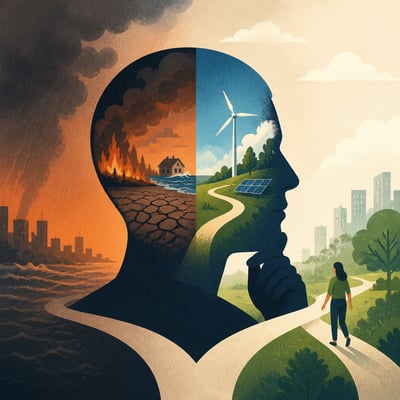
Research across multiple countries shows that climate action is shaped not only by knowledge of climate change, but also by whether risks feel immediate, personally relevant and manageable. Personal experience, local pollution, perceived efficacy, social media exposure and trust in communicators can increase engagement, while psychological distance, helplessness, skepticism and some deterministic end-of-world beliefs can weaken support for costly action. The findings point toward climate communication that connects risks to local concerns and uses messengers audiences consider credible.
First Article: 03/24/26
Latest Article: 06/22/26
Summary
- Personal experience and locally salient impacts can make climate risks feel more immediate and increase willingness to act.
- Perceived efficacy is a recurring driver of climate engagement, linking knowledge and social media exposure to mitigation intentions.
- Psychological distance, helplessness and some deterministic apocalypse beliefs are associated with lower support for costly climate action.
- Trust varies by audience: scientists and experts are broadly strong messengers, while skeptics place greater weight on peers, family and non-dismissive communicators.
- Chinese and Belgian student samples showed different views of the necessity of individual action, associated with perceptions of government responsibility.
- Effective communication may connect climate change with health, air quality and economic effects rather than relying on abstract global framing.
History
The story now places greater emphasis on perceived agency and local relevance as the main drivers of climate engagement, while adding evidence from China and Belgium that views on individual action depend partly on perceived government responsibility. It also broadens the communication takeaway toward health, air quality, and economic framing.
Featured
Timeline: 91 Days
Hover over any logo to see coverage summary, click for full article.