
 Climate
 Privacy
 Bob Dylan
 Drones
 Data Centers
 AI Governance
 2026 Maine Senate Race
Clean Power Projects Move Forward
Coverage from Heatmap, Climateactapp, and others
Articles
18
Active Days
158
The Topic
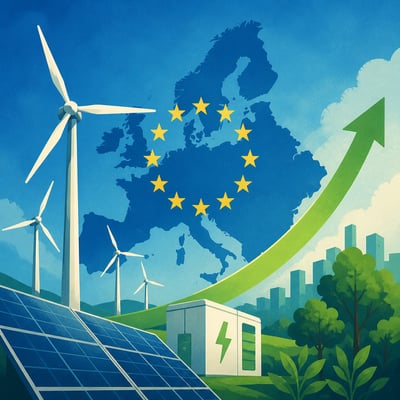
The topic tracks a broad set of advances in clean electricity, grid storage, electrified transport, industrial decarbonization, and climate technology finance. Offshore wind projects in the northeastern United States have begun supplying power, France reported a highly low-carbon electricity mix, and large storage and renewable projects are progressing in several countries. Funding and research activity also spans carbon removal, EV charging, geothermal power, lower-energy metals production, hydrogen, and ecosystem restoration, although the material combines operational developments with early-stage projects and positive-news roundups.
First Article: 01/30/26
Latest Article: 07/06/26
Summary
- Revolution Wind and Vineyard Wind 1 began supplying electricity to the New England grid after legal and construction delays.
- France reported that 95.2% of its electricity was zero-carbon in 2025, while coal generation fell to less than 1%.
- Large storage projects are advancing in China, the United States, and the Netherlands, including compressed-air, battery, and iron-air systems.
- Climate technology funding is supporting carbon removal certification, EV charging, geothermal turbines, lower-energy metals production, and long-duration storage.
- Electrification is expanding through rail, electric vehicles, solar power, and clean-energy systems for remote communities.
- Conservation initiatives are restoring endangered species and creating protected corridors intended to help ecosystems adapt to climate change.
- The evidence is heterogeneous, mixing operating assets and reported outcomes with planned projects, research findings, and company claims.
History
The story has sharpened from broad optimism about clean-energy momentum into a more concrete update on operating milestones, especially offshore wind delivering power and France’s exceptionally low-carbon electricity mix. It also now places greater emphasis on a wider, more heterogeneous pipeline of climate technologies and conservation work, mixing live assets with early-stage projects and funding rounds.
The story shifts from broad clean-energy deployment momentum to a more explicit emphasis on accelerating buildout alongside grid reliability constraints, policy support, and adaptation projects. It also broadens geographically and institutionally, with new attention to global resilience themes and more distinct government and utility involvement.
Featured
Timeline: 158 Days
Hover over any logo to see coverage summary, click for full article.