History
07/23/20260 new articles
The story now puts more emphasis on ComEd’s distributed-energy management and affordability framework, while clarifying that beneficial-electrification support continues through 2028 and remains under regulatory review.
07/23/20260 new articles
The main update is a clearer policy and regulatory framing: ComEd’s grid and electrification push is now explicitly tied to Illinois clean-energy laws, with CRGA and CEJA shaping the funding outlook after 2028. The current version also adds a specific bill-impact estimate for the 2028–2031 grid plan and more explicit uncertainty around ICC approval.
07/22/20261 new articles
The story now adds a concrete 2028–2031 grid proposal and a larger, more detailed funding picture, showing ComEd moving from general expansion to a specific regulatory plan tied to new electrification and clean-energy spending. It also introduces a sharper implementation question: how beneficial-electrification funding will be handled after 2028.
- Proposed 2028–2031 grid plan targets substations, communications, and automation.
- 2026 Beneficial Electrification Plan sets $89 million in funding.
- ComEd reported over $10 billion in renewable-energy credit contracts.
- More than 4,000 heat-pump installations were supported in 2025.
- Beneficial-electrification funding after 2028 remains undecided.
05/19/20260 new articles
The main shift is that ComEd’s story now explicitly includes solar and battery storage, not just heat pumps and EV charging, as core elements of its grid-and-electrification buildout. The framing also tightens around affordability constraints and faster interconnection as central planning priorities.
05/11/2026Topic Formed
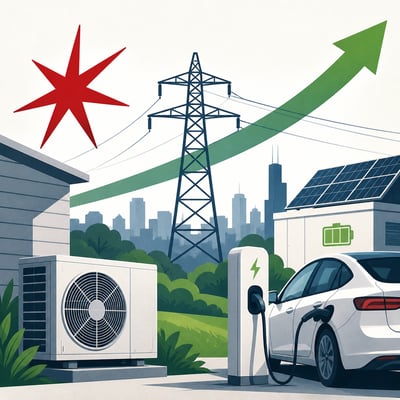
The cluster centers on ComEd's active expansion of grid and electrification programs in northern Illinois, with emphasis on heat pumps, EV charging rebates, distributed energy integration, and grid modernization. The dominant current signal is implementation: multi-year utility planning, rebate funding, and infrastructure upgrades intended to support higher electricity demand while preserving reliability and affordability. The cluster is cohesive and operational rather than theoretical.

 Climate
 Privacy
 Bob Dylan
 Drones
 Data Centers
 AI Governance
 2026 Maine Senate Race