History
07/23/20261 new articles
The update mostly sharpens and extends the same heatwave story rather than changing it: 2026 heat episodes are now described as repeated, with impacts stretching into July and slightly more specific attribution and mortality framing. The inclusion of named public-health and meteorological agencies also makes the response side more concrete.
07/22/20261 new articles
The story has widened from repeated extreme-heat events and attribution findings to a more acute damage profile: confirmed excess deaths, wildfire impacts, and even power-system failures are now central. The framing also broadens eastward and southward across Europe, emphasizing how poorly adapted buildings and public systems are to sustained extreme heat.
- Thousands of excess deaths were preliminarily estimated across multiple countries.
- Wildfire activity and evacuations were linked to the hot, dry conditions.
- A nuclear plant shut down because cooling water overheated.
- The affected geography now explicitly includes Southern Europe.
- High energy costs and uneven cooling access are highlighted as exposure factors.
07/20/202628 new articles
The story has broadened from a late-June heatwave crisis into a repeated early-summer pattern across western and central Europe, with stronger emphasis on record-breaking spring and summer temperatures, longer heat seasons, and nighttime heat. The main new takeaway is that adaptation pressure is shifting from short-term response to structural vulnerability in housing, health systems, and cooling demand.
- Multiple early-summer heatwaves broke record May and June temperatures.
- Human-caused warming is linked to higher likelihood and severity repeatedly.
- Longer summer seasons and earlier onset of heat are now a key concern.
- Nighttime heat is singled out as a major health-risk amplifier.
- Adaptation focus has shifted toward building design and cooling access.
07/06/2026Topic Formed
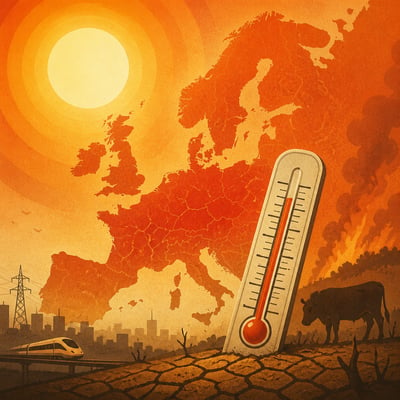
Europe is experiencing a severe run of heatwaves that scientists say climate change has made much more likely and more intense. The hot spell has already driven deaths, transport and power disruptions, wildfire danger, and major losses in livestock, while officials and researchers warn that many European systems were built for cooler conditions. The coverage also shows a growing focus on adaptation, including heat-health warnings, cooling measures, and livestock protections, alongside debate over whether current responses are adequate.

 Climate
 Privacy
 Bob Dylan
 Drones
 Data Centers
 AI Governance
 2026 Maine Senate Race