History
07/23/20260 new articles
The story now adds that the assessment process was not only disrupted but later restarted under researchers skeptical of mainstream climate science, and it broadens the implications to specific downstream users of climate-risk baselines. It also sharpens the institutional restructuring theme by adding the National Science Board as a second major body hit by terminations.
07/23/20260 new articles
The core story is unchanged, but the current version adds sharper detail on how the administration is justifying the restructuring and broadens the stated downstream impacts. It also slightly reframes the Sixth National Climate Assessment disruption as a stop-work/replacement process that left methods and conclusions unsettled.
07/22/20260 new articles
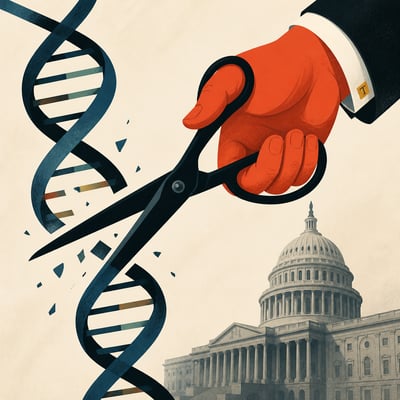
The story expands from leadership and assessment disruption into a broader federal science restructuring that now explicitly includes EPA research losses and the termination of the National Science Board. It also adds a new implementation response, with scientific organizations moving to create independent climate-risk research capacity.
- EPA Office of Research and Development lost staff, laboratories, and research projects.
- All 22 National Science Board members were terminated.
- The Sixth National Climate Assessment was restarted with climate-skeptical researchers.
- American Geophysical Union and American Meteorological Society plan independent research efforts.
07/20/202610 new articles
The story has shifted from broad cuts to federal science institutions toward a more specific battle over who controls the National Climate Assessment and how climate evidence is framed. The new appointment of Matthew M. Wielicki, plus the added emphasis on public-facing climate information and risk baselines, makes governance of climate assessment the center of the story.
- Matthew M. Wielicki was appointed to lead the U.S. Global Change Research Program.
- The National Climate Assessment process has been disrupted by dismissals and stop-work orders.
- Public-facing climate information has been disrupted through website removals.
- Governments, insurers, lenders, engineers, and litigants rely on the assessment.
- Uncertainty and emissions-scenario handling have emerged as a separate dispute.
06/29/20261 new articles
The story now reads as a sharper, more concrete dismantling of federal science capacity, with the full National Science Board firing and EPA research cuts framed as an active purge rather than just governance drift. The added detail also introduces direct claims about halted climate and environmental health studies, making the scientific consequences more specific and urgent.
05/19/20260 new articles
The story has broadened from board removal and EPA restructuring to a clearer structural case: federal science capacity is being reduced through staffing cuts, lab closures, and proposed budget changes. The framing also now emphasizes that these changes may extend beyond NSF and EPA into a wider federal science ecosystem, including climate-relevant institutions.
- Proposed or reported reductions to federal science funding now feature in the story.
- EPA changes include staffing reductions and lab closures.
- Climate-relevant institutions beyond NSF and EPA are now part of the account.
- Some proposals are described as extending into 2027.
05/11/2026Topic Formed
The cluster is centered on a coordinated weakening or restructuring of U.S. federal science institutions that support climate and environmental research. The dominant signal is governance and staffing intervention at NSF and EPA, with related concern about reduced independence, reduced research capacity, and downstream effects on climate monitoring, exposure science, and regulation.

 Climate
 Privacy
 Bob Dylan
 Drones
 Data Centers
 AI Governance
 2026 Maine Senate Race