
 Climate
 Privacy
 Bob Dylan
 Drones
 Data Centers
 AI Governance
 2026 Maine Senate Race
US Solar Growth Faces Policy Delays
Coverage from E&E News by POLITICO, Yahoo, and others
Articles
9
Active Days
81
The Topic
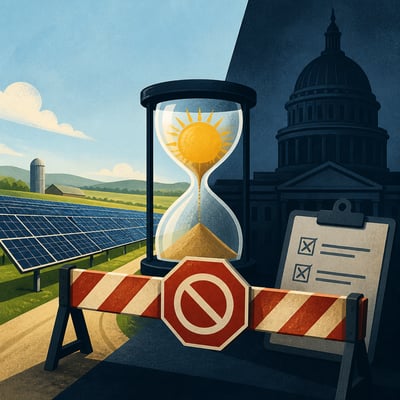
U.S. solar development is continuing, but changes to federal tax credits, permitting procedures, and rural-energy support are forcing developers, farmers, and tribal projects to accelerate plans, seek alternative financing, or abandon projects. Utility-scale projects that secured protections before the policy shift remain better positioned, while rooftop, farm, and smaller projects face greater exposure. The resulting uncertainty could slow additions, reshape project locations and ownership models, and affect how the grid responds to rising electricity demand.
First Article: 04/17/26
Latest Article: 07/06/26
Summary
- Federal tax-credit changes create deadlines for commercial solar projects and are prompting some developers to accelerate, redesign, or cancel projects.
- More than 200 gigawatts of major utility-scale projects were reportedly safe-harbored, helping preserve near-term growth despite the incentive phaseout.
- Permitting requirements and federal oversight are delaying projects on federal and, in some cases, private land.
- Rooftop solar, farm installations, and smaller companies face greater financing and reimbursement uncertainty than large utility-scale developments.
- The Ute Mountain Ute Tribe’s planned 270-megawatt solar and 180-megawatt battery project shows that projects with earlier permits and committed buyers can remain viable.
- Growing electricity demand, including from data centers, and solar’s relatively low cost continue to support development despite policy headwinds.
- Solar policy changes are affecting rural investment, farm finances, project employment, and the pace of new electricity supply.
History
The update sharpens the story around broader disruption: federal policy changes are now clearly pushing developers to accelerate, redesign, or cancel projects, while established utility-scale and tribal projects still have a path forward. It also adds a stronger emphasis on electricity-demand growth and rural economic impacts as key consequences of the policy shift.
The story now places greater emphasis on which solar projects can still advance despite federal tightening: large utility-scale and tribal projects with earlier permits or land access, while smaller rooftop and rural projects remain more exposed to lost support and deadline pressure. It also adds a new competitive wrinkle, with battery storage and gas capacity expected to take more of the grid-buildout share.
Featured
Timeline: 81 Days
Hover over any logo to see coverage summary, click for full article.