
 Climate
 Privacy
 Bob Dylan
 Drones
 Data Centers
 AI Governance
 2026 Maine Senate Race
Geothermal Expands Beyond Volcanic Regions
Coverage from The Cool Down, The Conversation, and others
Articles
15
Active Days
502
The Topic
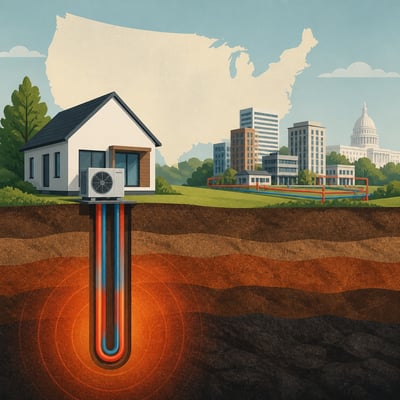
Geothermal energy is attracting renewed attention as drilling, reservoir engineering, and high-temperature technologies make it possible to access heat in regions without conventional volcanic resources. Projects and market analyses in the United States, Australia, Europe, and Oregon highlight potential for reliable low-carbon electricity, district heating, and efficient building systems. The main constraints remain high exploration and drilling costs, incomplete geological data, permitting complexity, and the need to demonstrate next-generation systems at commercial scale.
First Article: 03/10/25
Latest Article: 07/24/26
Summary
- Enhanced and superhot-rock systems aim to access geothermal heat in a much wider range of locations than conventional projects.
- Geothermal is being positioned as reliable low-carbon power that can complement weather-dependent generation and support rising electricity demand.
- The United States, Australia, Europe, and Oregon are developing or assessing projects using deeper drilling, advanced reservoirs, or high-temperature systems.
- Geothermal heat pumps and thermal energy networks are already established or emerging in building and district heating markets, particularly in the United States.
- Oil and gas drilling, reservoir-management, sensors, and engineering expertise are being adapted for next-generation geothermal projects.
- High upfront drilling costs, uncertain subsurface conditions, limited geological data, and lengthy permitting continue to slow wider adoption.
- A separate Australian pathway involves electric hot-water heat pumps that can reduce energy use and shift demand toward cheaper or surplus electricity.
History
The story now places stronger emphasis on current project activity and market assessment, especially in Oregon and the U.S., while broadening the framing from general next-generation geothermal potential to specific near-term applications in buildings and district heating. It also sharpens the constraints by highlighting commercial-scale demonstration as the remaining hurdle.
The story has broadened from general geothermal market growth to a more specific emphasis on next-generation technologies and their geographic and operational constraints. It now adds Europe as a major focus, highlights closed-loop and superhot-rock systems, and brings in new policy and industry actors.
Featured
Timeline: 502 Days
Hover over any logo to see coverage summary, click for full article.