
 Climate
 Privacy
 Bob Dylan
 Drones
 Data Centers
 AI Governance
 2026 Maine Senate Race
Heat Pumps Drive Home Electrification
Coverage from Carbon Brief, Global Renewable News, and others
Articles
17
Active Days
177
The Topic
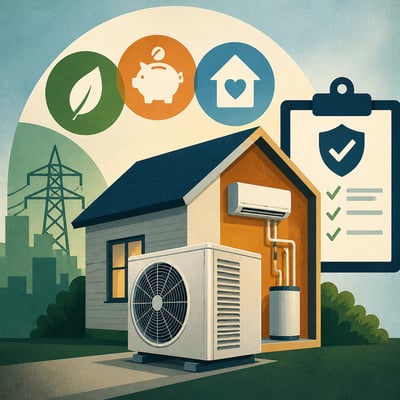
Governments, utilities and companies are expanding support for heat pumps, home retrofits and efficient electric heating to reduce building emissions and energy costs. The United Kingdom and Canada are directing public funding toward household upgrades, while British Columbia is pairing efficiency programs with hydroelectric and transmission investments to meet rising electricity demand. Adoption remains dependent on policy continuity, household access to funding and sufficient clean power, with British Columbia also showing how climate-policy rollbacks can weaken incentives for electrification.
First Article: 01/01/00
Latest Article: 06/29/26
Summary
- The UK’s Warm Homes Plan proposes up to £15 billion in grants and loans for heat pumps, insulation and rooftop solar, potentially reaching up to 5 million households by 2030.
- Canada’s expanded Greener Homes Affordability Program offers no-cost heat pumps and efficiency upgrades to more than 35,000 low- and median-income households, including in British Columbia.
- British Columbia is planning for roughly 50% growth in electricity demand by 2050 through efficiency measures, hydroelectric upgrades, new generation options and transmission investment.
- BC Hydro expects upgrades to existing facilities, including Revelstoke and G.M. Shrum, to add more than 1,000 megawatts of dependable capacity.
- Amazon has moved from a Houston field trial to a multiyear agreement for Transaera rooftop heat pumps, highlighting early commercial scaling of efficient electric HVAC technology.
- British Columbia’s rollback of carbon pricing and electrification measures is creating tension between climate objectives, LNG-related electricity demand and incentives for households to adopt heat pumps.
- The evidence repeatedly links electrification with lower emissions and potential bill savings, but deployment scale, costs and realized savings remain uneven or undisclosed.
History
The story now puts more emphasis on British Columbia’s electricity-supply planning, adding transmission and new-generation options alongside efficiency and hydro upgrades. It also sharpens the policy-risk angle by tying BC’s rollback of electrification measures more directly to LNG-driven demand and household heat-pump incentives.
The story has broadened from mainly residential heat-pump support in the UK and British Columbia to a wider electrification and grid-capacity narrative that now includes Canada-wide retrofit funding, commercial rooftop heat pumps, and electricity-supply constraints. The biggest change is that policy support is being paired with concerns about whether clean power and incentives can keep pace with demand.
Featured
Timeline: 177 Days
Hover over any logo to see coverage summary, click for full article.