
 Climate
 Privacy
 Bob Dylan
 Drones
 Data Centers
 AI Governance
 2026 Maine Senate Race
Carbon Capture Adapts To Industrial Flue Gas
Coverage from ScienceDirect, IndexBox Inc., and others
Articles
3
Active Days
95
The Topic
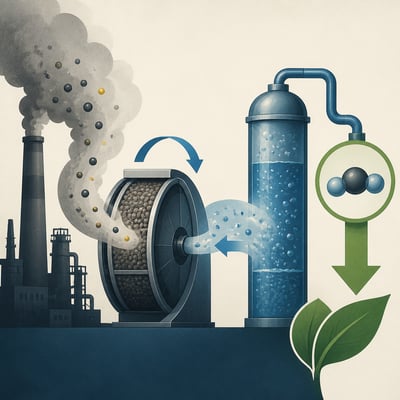
Carbon-capture developers and researchers are focusing on making amine-based post-combustion systems less energy-intensive and more resilient to contaminants in industrial flue gas. A simulated rotary adsorption and desorption wheel combined with amine absorption reported more than 40% lower annual energy use than a typical amine system, while Shell and Technip Energies are adapting established capture technology to the variable impurities found in cement-kiln emissions. The developments highlight energy penalties, solvent degradation, and gas variability as key barriers to wider industrial deployment.
First Article: 03/18/26
Latest Article: 06/20/26
Summary
- A modeled RADW-ABA system combines rotary adsorption and desorption with aqueous amine absorption.
- The study predicts more than 40% lower annual energy consumption than a typical amine-based capture system.
- The hybrid design is intended to limit SO2 exposure, reduce solvent degradation, and maintain performance during flue-gas changes.
- System performance depends on rotary-wheel design parameters and gas-splitting ratios.
- Shell and Technip Energies are adapting amine-based capture to the more variable and contaminated flue gas produced by cement kilns.
- Pilot testing on actual cement flue gas has been used to refine contaminant-management and operating strategies.
History
The story now places the cement-sector thread front and center by naming Shell Catalysts & Technologies and Technip Energies as active developers, rather than just a general application area. It also adds implementation detail: pilot testing on real cement flue gas is being used to refine operating strategies.
Featured
Timeline: 95 Days
Hover over any logo to see coverage summary, click for full article.