
Last Update: 06/03/2026 at 9:50 AM EST
Iran Conflict And Clean Energy
Coverage from Heatmap News, The New York Times, and others
Articles
53
Latest Article
05/29
Active Days
71
Executive Summary
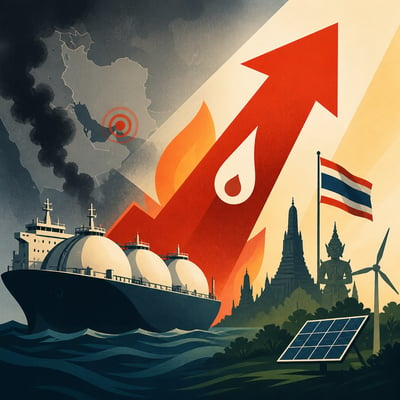
Recent coverage links Iran-related disruption in the Strait of Hormuz to higher oil and LNG prices, tighter supply conditions, and renewed arguments for faster renewable, storage, and electrification investment. The strongest pattern is an energy-security frame: fossil fuel chokepoints look fragile, while clean electricity is portrayed as more resilient after buildout. At the same time, many systems still rely on gas, coal, and LNG in the short run, so the transition signal is mixed rather than settled.
Key Points
- Strait of Hormuz disruptions are the dominant current driver, pushing up oil and LNG prices and exposing reliance on a narrow set of fossil fuel shipping routes.
- Renewables are repeatedly framed as a resilience tool because solar and wind avoid fuel-price exposure once built and can reduce import dependence.
- Near-term responses remain split: some countries are accelerating clean power, while others are adding LNG terminals, gas capacity, coal generation, or nuclear plans.
- Energy investment is shifting toward grids, storage, renewables, electrification, and nuclear, but fossil fuels still attract large capital flows, especially gas and some coal.
- Country-level exposure varies sharply: import-dependent systems such as Thailand and Bangladesh face higher stress, while China appears more insulated because of stockpiles and domestic generation.
- Clean-energy supply chains are not risk-free; critical mineral processing, shipping, and industrial capacity remain a vulnerability in the transition.
- The topic is coherent and structurally important, with strong current signal but also a clear tension between resilience-driven clean-energy expansion and continued fossil reliance.
Featured Article
Oil and LNG export disruption through the Strait of Hormuz escalated fuel costs in Asia, Europe, and Africa, increasing pressure for faster renewable energy deployment and electrification.
Coverage Timeline: 71 Days
Hover over any logo to see coverage summary, click for full article.
Additional Articles
⭐⭐⭐⭐⭐
A Hormuz Strait energy disruption is expected to accelerate Asian electrification and nuclear investment while increasing short-run coal use across the region.
Iran-related conflict risk is linked to fossil chokepoint fragility and is used to argue for faster renewable energy transition.
Strait of Hormuz disruptions during the Iran conflict increased global oil and LNG prices, with countries having clean electricity and electrified transport described as more resilient.
During Strait of Hormuz disruptions tied to the Iran war, China and Pakistan relied on prior solar and EV buildouts to reduce exposure to fuel price shocks.
Thailand faces higher LNG costs after the Iran conflict reduces LNG availability, prompting policy shifts toward accelerated solar and other renewables ahead of the next Power Development Plan.
Following the Strait of Hormuz blockade starting in early March, multiple countries reported fuel shortages and reviewed energy transitions toward renewables, nuclear, and electrification.
China and multiple Asian economies respond to Iran-war-linked energy stress with oil stockpiling, demand limits, expanded power supply, and longer-run investment in solar, batteries, nuclear, and electrification.
International Energy Agency reporting of 800 gigawatts of renewable additions coincides with Iran war risks to clean-energy financing and metal and solar-material supply chains.
Rystad Energy forecasts three-to-12-month renewable project delays in Middle East markets due to conflict-driven supply chain disruptions and financing risk premiums.
Michael Liebreich says a prolonged closure of the Strait of Hormuz could accelerate global clean-energy investment and reduce long-term fossil fuel dependence.
⭐⭐⭐
Fatih Birol of the IEA said the global energy crisis will not end until Strait of Hormuz traffic resumes, warning of continuing economic damage.
During the Iran war, Middle East oil and LNG disruptions raised gasoline prices in the US, Europe, and Asia and highlighted constraints on energy dominance amid energy-transition supply-chain risks.
The International Energy Agency links Iran-war fuel-price and supply risks to emergency clean energy actions in nearly 40 countries, accelerating renewables, batteries, and electric vehicles.
UNFCCC climate officials and government leaders cite Iran-war oil and gas disruptions as a driver of renewables deployment and electric vehicle growth while some countries increase coal use, amid fossil fuel phaseout talks in Colombia.
Higher fuel costs after the Iran war increase rooftop solar installations in the Philippines during February to April, while China expands solar exports across Asia and Africa.
Energy Transitions Commission cites the Iran conflict as a driver for faster renewable and storage investment due to reduced exposure to fossil supply disruptions.
BloombergNEF projects oil demand plateaus in the early 2030s while natural gas demand rises through mid-century, and clean energy investment must double for net zero by 2050.
BloombergNEF, Wood Mackenzie, and other analysts report that rising energy prices tied to conflict are changing generation fuel economics, with some coal rebounds and faster cleantech momentum in multiple countries.
Amid Iran war-driven oil disruptions, Chinese EV, solar, battery, and wind exports have risen as countries pursue energy security during trade talks in Beijing.
After the Feb. 28 start of the Iran war, higher fuel costs increased rooftop solar installations in the Philippines while China boosted clean technology exports in March.
After the Iran war began in late February, fuel-price spikes in the Philippines increased rooftop solar installations and inquiries while Chinese solar exports rose in March.
Energy Transitions Commission executives including Adair Turner cite Iran-linked oil disruptions as rationale for faster renewable deployment in energy-transition investments.
Analysts link Iran war-driven fuel price shocks to larger European power price increases in gas-dependent systems and greater stability in renewable-heavy Albania.
The IEA forecasts $3.4 trillion in global energy investment for 2026, citing Hormuz Strait closure risks that redirect spending toward grids, storage, and low-emissions capacity.
Fuel price increases from the Iran war since Feb. 28 boosted rooftop solar installations and inquiries in the Philippines, alongside record Chinese solar exports in March.
After the Iran war, Europe and Asia accelerate clean-energy electrification, while China-dominated solar, battery, EV, and wind supply chains raise security and trade concerns.
Energy Transitions Commission flags that Hormuz-related fossil price volatility increases energy security risks and recommends accelerating renewables and electrification.
Qatar helium shutdown and Iran-linked supply disruptions in Bahrain and the UAE raise aluminum and semiconductor input costs for solar and wind manufacturing as oil prices remain volatile.
Mahindra Group accelerates resort kitchen electrification in Asia as the IEA world energy investment report cites reduced fossil fuel import costs from electrification and efficiency.
Asian governments in the 2020s implemented fuel-tax suspensions and subsidy programs after Gulf supply shocks raised fuel prices, while energy transition toward renewables accelerated.
Energy transition investment growth is framed as resilience against geopolitical oil chokepoint risk centered on the Strait of Hormuz.
Europe and Asia are shifting faster toward Chinese-made solar, batteries, wind equipment, and grid infrastructure as Strait of Hormuz oil shocks affect energy security amid the U.S.-Iran conflict.
During the Iran war and Strait of Hormuz disruption, countries dependent on Middle East oil and LNG accelerate renewable, battery, and EV adoption while China expands grid and clean-energy supply.
International Energy Agency said a Hormuz-related supply disruption amid the US-Israel war against Iran drove fuel and fertilizer price increases while renewables costs fell.
The International Energy Agency describes the Hormuz crisis as a major oil-supply disruption in March, driving transport demand cuts and renewables and EV acceleration policies across multiple countries.
IEA executive director Fatih Birol said Middle East conflict and the Strait of Hormuz standoff will drive durable renewables and nuclear policy shifts worldwide.
Geopolitical disruptions near the Strait of Hormuz are driving energy policy changes worldwide, with renewables, batteries, EVs, and nuclear investment expanding as fossil exposure falls.
After Strait of Hormuz disruption and US subsidy rollbacks for solar, wind, and EVs, multiple countries see renewed renewables and EV demand while some shift toward coal and face fertilizer-driven food risks.
Renewables with battery storage and grid flexibility are presented as a way to reduce fossil-fuel-linked electricity price spikes during geopolitical disruptions.
War disruptions near the Strait of Hormuz in the Middle East have raised oil prices, driving different renewable energy transition pathways across exporting and importing countries.
Renewable energy transition is argued to reduce fossil-fuel geopolitics and economic disruption, alongside national and regional climate impacts, in contrast to reported US offshore wind rollback.
The International Energy Agency described Iran-linked conflict as a major oil supply disruption, prompting countries in late-April Colombia talks to accelerate renewable energy and electrification.
Iran conflict intensified exposure of oil and LNG chokepoints, and renewable deployment is presented as a resilience and price-stability strategy alongside critical-mineral supply-chain upgrades.
The International Renewable Energy Agency reports record renewable growth as Strait of Hormuz disruptions spur electrification and conservation in Asia and Europe.
An AP report in March 2026 links Iran conflict-driven Strait of Hormuz oil and LNG disruption to higher energy prices and renewed momentum for renewable energy deployment across Asia, Europe, and Africa.
Iran war is credited with accelerating solar, wind, and EV adoption outside the United States through renewed energy security and market-shifting effects.
Rising oil prices from Strait of Hormuz disruption in 2026, amid US-Iran tensions, may accelerate renewable deployment and reinforce China’s clean-energy manufacturing lead.
Amid US-Israeli strikes on Iran and Strait of Hormuz supply disruption, commentary highlights that wind and solar generation is less affected by fossil fuel price volatility after build-out.
IEA emergency reserves totaling 400 million barrels are authorized after Strait of Hormuz disruption, while clean energy scaling and Africa electricity-access programs are highlighted amid record heat.
The IEA World Energy Investment report projects rising fossil fuel investment and stagnant clean energy investment amid geopolitical instability and energy price volatility.
⭐️⭐️
During the Iran conflict, analysis links fossil-fuel shipping risks through the Strait of Hormuz to faster solar and wind deployment despite critical-mineral supply constraints.
During an Iran war disruption to Strait of Hormuz oil and LNG exports, import-dependent countries in Asia, Europe, and Africa faced energy price pressure that renewed focus on renewable energy scaling.