
 Climate
 Privacy
 Bob Dylan
 Drones
 Data Centers
 AI Governance
 2026 Maine Senate Race
Landfill Methane Mitigation And Reuse
Coverage from Jalopnik, Global Renewable News, and others
Articles
3
Active Days
321
The Topic
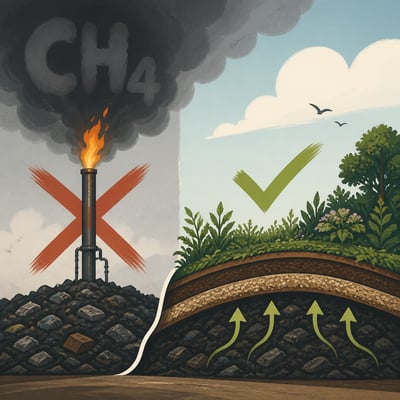
Landfills are a significant methane source, but capturing and flaring landfill gas does not eliminate emissions because collection systems leave some methane unmanaged and performance varies with design, maintenance, and operating conditions. Effective mitigation increasingly combines organic waste diversion, stronger landfill operations, surface monitoring, and methane oxidation systems with gas capture. Closed landfills also require long-term methane, leachate, and cap management when redeveloped as parks, habitats, solar sites, or other community assets.
First Article: 08/10/25
Latest Article: 06/26/26
Summary
- Landfill gas capture typically leaves a significant share of methane unmanaged, even when systems are operating properly.
- Organic waste diversion can reduce methane generation at its source rather than treating methane after it forms.
- Operational controls such as improved covers, smaller active working areas, leachate management, and surface monitoring can reduce leaks and identify super-emitting areas.
- Biocovers and related microbial oxidation systems offer complementary options, particularly at older or smaller sites where gas capture may be impractical.
- Flaring reduces methane only after it has been collected, and combustion performance can vary with flare design and weather conditions.
- Closed landfills are being converted into parks, habitats, golf courses, and renewable energy sites while retaining long-term environmental safeguards.
History
The story now extends beyond mitigation mechanics to include the long-term reuse and management of closed landfills, showing these sites can be redeveloped while still requiring ongoing environmental controls. It also adds specific redevelopment examples, broadening the practical context of landfill methane management.
Featured
Timeline: 321 Days
Hover over any logo to see coverage summary, click for full article.