
 Climate
 Privacy
 Bob Dylan
 Drones
 Data Centers
 AI Governance
 2026 Maine Senate Race
Last Update: 08/01/2026 at 12:00 PM EST
Low-Mineral Energy Transition Pathways
Coverage from Mirage News, Greenpeace International, and others
Articles
3
Active Days
11
The Topic
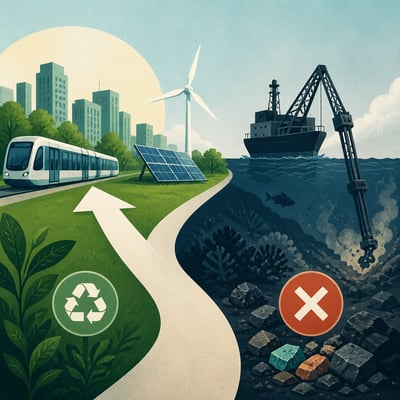
Recent material argues that climate targets can still be met with lower mineral extraction if governments expand public transport, scale recycling, and steer technology choices toward lower-demand pathways. Deep sea mining and ecosystem harm remain central concerns.
First Article: 03/06/26
Latest Article: 03/16/26
Summary
- Recent reports repeatedly argue that a Paris-aligned energy transition does not require a large increase in mineral extraction if demand is managed well.
- Public transport expansion, recycling, and circular-economy measures are the main levers presented for reducing mineral demand.
- Battery and technology choices are treated as important variables that can materially change future needs for lithium, nickel, cobalt, and other minerals.
- Deep sea mining is presented as a major governance and environmental risk, with strong emphasis on avoiding it where possible.
- The material links mineral strategy to protection of ecosystems and Indigenous lands, making land-use and rights issues part of the transition debate.
- The evidence is mostly scenario-based and normative rather than implementation-based, so the core question is policy adoption rather than technical feasibility.
History
This topic is new, but as new articles are added to it this area will summarize shifts, changes and expansions of the issues.
Featured
03-16-2026
Global study shows 2024-2050 energy transition can reduce mineral demand through recycling and transport policy worldwide.
03-09-2026
Greenpeace International releases a report on pathways for a 1.5C aligned energy transition with less minerals in Amsterdam, Netherlands in 2026.
03-06-2026
Greenpeace International and Institute for Sustainable Futures analyze mineral demand pathways worldwide from 2024 to 2050.
Timeline: 11 Days
Hover over any logo to see coverage summary, click for full article.