
Maryland Climate Liability Rejection
Coverage from Courthouse News Service, Reuters, and others
Articles
7
Latest Article
03/31
Active Days
7
Executive Summary
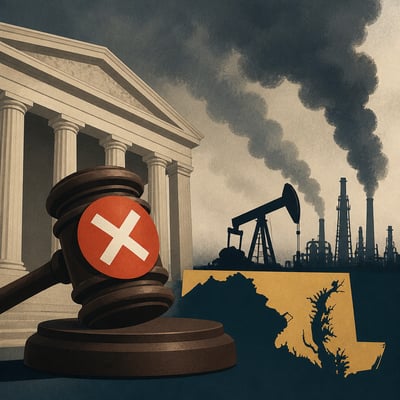
Maryland's high court has sharply narrowed local climate-liability lawsuits, ruling that Baltimore, Annapolis, and Anne Arundel County cannot use state tort law to pursue damages tied to global fossil-fuel emissions. The dominant pattern is judicial resistance to local climate nuisance and failure-to-warn claims when they are framed as attempts to regulate interstate or international emissions. The material is cohesive and current, with little historical spillover beyond earlier filings and related national litigation. The main uncertainty is how far this reasoning will extend to other states and to the U.S. Supreme Court review of related cases.
Key Points
- Maryland's Supreme Court rejected local climate-damages suits brought by Baltimore, Annapolis, and Anne Arundel County against major fossil fuel companies.
- The court treated the claims as an effort to regulate emissions with global effects, placing them outside ordinary state nuisance law.
- Federal preemption under the Clean Air Act is the main legal barrier repeated across the material.
- The opinions also emphasize jurisdictional limits, arguing state courts are not the right venue for regulating worldwide conduct.
- Dissenting or opposing views focus on whether some claims resemble fraud or failure-to-warn theories rather than emissions regulation.
- The decision sits within broader climate-liability litigation that may be shaped by pending U.S. Supreme Court review.
Featured Article
Coverage Timeline: 7 Days
Hover over any logo to see coverage summary, click for full article.