History
07/23/20260 new articles
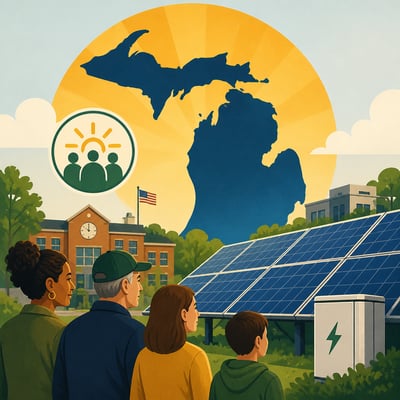
Michigan’s clean energy story is now framed more explicitly around implementation: local solar, school modernization, and climate finance are moving from planning toward concrete projects, while reduced federal support makes state and local financing more central.
07/22/20262 new articles
Michigan’s clean-energy story has broadened from local solar-buying and school projects into a statewide transition framework centered on planning, climate finance, and workforce impacts. The new version adds explicit long-term emissions and jobs claims, making the effort look more like a coordinated state transition than a set of local pilots.
- MI Healthy Climate Plan sets a 2050 carbon-neutrality framework.
- MI Climate Investment Hub links lenders, philanthropy, and community groups.
- Clean energy investment projected to create 85,000-100,000 jobs annually.
- Nearly all of Michigan’s fossil fuel jobs could eventually be phased out.
- Labor and teachers’ unions are involved in school clean-energy efforts.
05/21/20260 new articles
The story is now framed less as a general spread of Michigan clean-energy activity and more specifically as a sustained local infrastructure response to weakened federal support. It also adds clearer emphasis on school-district implementation and on the concentration of activity in a narrower set of Michigan localities.
05/11/2026Topic Formed
Michigan is seeing a broad push for community-based solar adoption through group purchases, local organizing, and school energy upgrades. The strongest current pattern is practical access-building: bulk discounts, vetted installers, and pilot programs are being used to keep solar moving as federal incentives weaken. Public institutions and local coalitions are also expanding geothermal, solar, and storage projects to cut utility costs and modernize aging buildings.

 Climate
 Privacy
 Bob Dylan
 Drones
 Data Centers
 AI Governance
 2026 Maine Senate Race