
 Climate
 Privacy
 Bob Dylan
 Drones
 Data Centers
 AI Governance
 2026 Maine Senate Race
Michigan Dam Safety and Flood Risk
Coverage from Grist, WBUR, and others
Articles
4
Active Days
27
The Topic
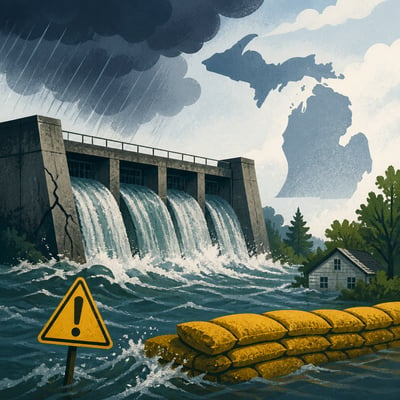
Recent flooding in Michigan exposed how aging dams can become flashpoints during extreme rain and snowmelt, with several structures coming close to overtopping or requiring emergency protection. The reporting connects these close calls to a broader pattern: many dams are older than their design life, inspections and upgrades are uneven, and climate change is intensifying the storms they must withstand. Across the material, dam removal and selective upgrades emerge as the main adaptation paths, but funding, ownership, and local resistance complicate action.
First Article: 05/07/26
Latest Article: 06/02/26
Summary
- Northern Michigan flooding pushed rivers to record levels and brought some dams within inches of overtopping.
- Michigan has many dams beyond their intended design life, and several are classified as high hazard.
- The issue is not limited to one storm: older dams across the state and country are being tested by heavier rainfall patterns.
- Dam removal is increasingly treated as a practical risk-reduction strategy, especially where upkeep is expensive or structures no longer serve a clear purpose.
- Major funding gaps remain, and available state and federal programs do not cover the scale of needed repairs or removals.
- Michigan’s recent dam-safety debate centers on inspections, private ownership, design standards, and whether more aggressive regulation is needed.
- Past failures, especially the 2020 Edenville disaster, continue to shape policy and public attention.
History
This topic is new, but as new articles are added to it this area will summarize shifts, changes and expansions of the issues.
Featured
Timeline: 27 Days
Hover over any logo to see coverage summary, click for full article.