
 Climate
 Privacy
 Bob Dylan
 Drones
 Data Centers
 AI Governance
 2026 Maine Senate Race
Offshore Wind Expansion Faces Bottlenecks
Coverage from Mongabay, Euronews, and others
Articles
13
Active Days
90
The Topic
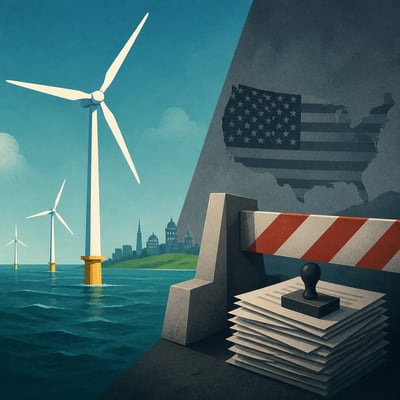
Offshore wind is advancing in China, Europe, and parts of the U.S., but deployment is being held back by permitting delays, grid-connection limits, supply-chain constraints, financing pressure, and emerging security concerns.
First Article: 03/19/26
Latest Article: 06/16/26
Summary
- Offshore wind remains a large-scale clean power option, but installed capacity is still far below levels associated with climate targets.
- China is the clearest deployment leader, combining new deep-water floating projects with HVDC transmission infrastructure to move power ashore.
- Europe faces a tight market for turbines and components, with higher prices, concentrated suppliers, and risk to future project pipelines.
- Permitting delays and delayed grid connections remain central bottlenecks in both Europe and the U.S., especially for large offshore buildouts.
- U.S. offshore wind shows mixed signals: new New England projects are operating, while lease cancellations and policy uncertainty continue elsewhere.
- Floating wind is still treated as a key growth pathway, but 2025 setbacks showed how sensitive it is to interest rates, supply chains, and auction design.
- Security concerns are emerging around North Sea offshore wind farms, especially drone overflights, cable vulnerability, and unclear incident reporting.
History
The story has shifted from a broad account of offshore wind constraints to a more specific emphasis on execution bottlenecks: grid connection limits, financing pressure, and security concerns now sit alongside permitting and supply-chain issues as the main brakes on deployment. U.S. activity is also more mixed, with operating New England projects offset by lease cancellations and policy uncertainty elsewhere.
The story has sharpened around two new centers of gravity: floating offshore wind, especially China’s near-term engineering progress, and North Sea energy-security concerns. It also adds clearer evidence that European supply-chain constraints and U.S. project execution remain real bottlenecks rather than background risks.
Featured
Timeline: 90 Days
Hover over any logo to see coverage summary, click for full article.