
 Climate
 Privacy
 Bob Dylan
 Drones
 Data Centers
 AI Governance
 2026 Maine Senate Race
Shipping Carbon Capture Logistics
Coverage from Carbon Herald, gasworld, and others
Articles
3
Active Days
31
The Topic
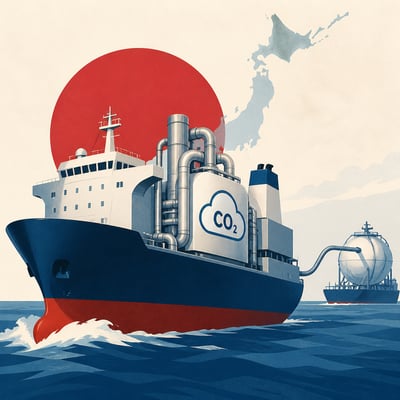
Shipping companies and industrial partners are advancing carbon capture and CO2 transport trials, with Japan emerging as a testbed for onboard capture and liquefied CO2 logistics. The main pattern is practical work on how captured carbon can be moved, offloaded, and stored when pipeline infrastructure is limited.
First Article: 03/24/26
Latest Article: 04/23/26
Summary
- Current activity is concentrated on making carbon capture usable in shipping through demonstration projects and transport-chain design.
- Japan is a repeated focal point, especially Tomakomai, where partners are using existing industrial and CCS infrastructure for trials.
- Liquefied CO2 transport is becoming a core enabling layer for CCS projects where pipelines are unavailable or impractical.
- The work is shifting from concept discussions toward engineering, feasibility, and operational planning, including vessel-based demonstrations.
- Partners are also addressing downstream handling of captured CO2, including offloading, transport, reuse, and storage.
- Standardization and project bankability remain important goals, suggesting the field still faces commercial and infrastructure uncertainty.
- The signal is narrow but coherent: maritime carbon management is being developed as an integrated logistics problem rather than a single capture technology.
History
The story is reframed less around onboard capture prototypes and more around integrated CCS logistics, with Japanese partners now emphasizing how captured CO2 will be transported, offloaded, reused, or stored when pipelines are unavailable. Tomakomai and liquefied CO2 handling have become the practical center of gravity.
Featured
Timeline: 31 Days
Hover over any logo to see coverage summary, click for full article.