
 Climate
 Privacy
 Bob Dylan
 Drones
 Data Centers
 AI Governance
 2026 Maine Senate Race
U.S. Solar Moves Ahead of Coal
Coverage from PBS News, The Guardian, and others
00/00/0000
Articles
50
Active Days
159
The Topic
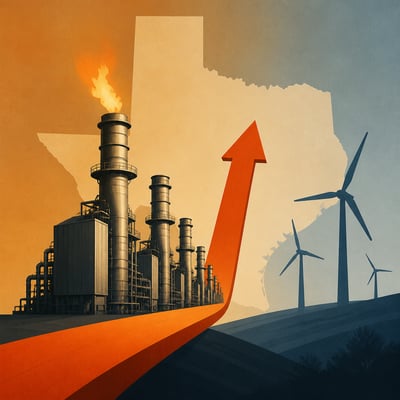
U.S. solar generation exceeded coal in May 2026, supplying 12.8% of national electricity versus coal’s 12.2%, while also becoming the country’s third-largest electricity source. Solar and battery storage dominated new generating capacity, and utility-scale additions are expected to remain strong as demand from data centers, manufacturing, transport, and heating increases. The shift is occurring alongside federal efforts to support coal and reduce or accelerate the phaseout of some clean-energy incentives, creating policy uncertainty for developers and grid planners.
First Article: 04/02/26
Latest Article: 09/07/26
History
The story now frames solar not just as overtaking coal, but as becoming the third-largest U.S. electricity source, underscoring a more durable shift in the power mix. It also adds more explicit policy and financing uncertainty around permitting changes, tariffs, and tax-credit deadlines.
The story now adds a sharper policy dimension: solar’s growth is still intact, but federal support for coal and changes to clean-energy incentives have become a more explicit headwind. It also broadens beyond Texas and ERCOT with a new California comparison and stronger emphasis on utility-scale solar’s near-term buildout.
- Solar supplied 12.8% of U.S. electricity in May 2026.
- Coal supplied 12.2% of U.S. electricity in May 2026.
- Solar and battery storage represented 91% of new U.S. generating capacity in Q1 2026.
- Utility-scale solar additions are forecast at about 43 gigawatts in 2026 and 2027.
- California is projected to see solar exceed gas generation.
The story has sharpened from a broad Texas grid transition narrative into a more specific near-term solar-versus-coal milestone story, with ERCOT forecasts now placing solar ahead of coal in Texas by 2026. The latest version also gives greater weight to grid bottlenecks and policy uncertainty as the main constraints on how quickly that shift can be built out.
- ERCOT forecasts solar ahead of coal in Texas in 2026.
- U.S. monthly solar generation first exceeded coal in May.
- Gas overtook wind in the Texas interconnection queue for the first time in a decade.
- Grid connection, congestion, labor, and permitting are now the main constraints.
- Tax-credit, permitting, and financing-rule changes add fresh policy uncertainty.
The story now puts much more emphasis on Texas grid planning under rapidly rising demand, especially the role of data centers, transmission spending, and gas as a faster-growing dispatchable option. It also adds a clearer policy conflict at the federal level, where support for coal is increasingly seen as colliding with continued renewable buildout.
- Gas has passed wind in the Texas interconnection queue for the first time in years.
- Texas transmission investment is rising sharply.
- Data center demand is driving dispatchable capacity planning.
- Federal policy is supporting coal while constraining some renewables.
- Wind faces congestion, curtailment, and permitting friction in Texas.
The biggest update is that the story has sharpened from a broad Texas/U.S. clean-energy shift into a more specific claim: solar has now overtaken coal in monthly U.S. generation, while Texas queue data increasingly points to solar, batteries, and gas being shaped by data-center demand and transmission limits.
The story broadened beyond Texas to emphasize California as a parallel battleground, while the core Texas signal sharpened: gas now leads wind in ERCOT’s queue even as solar and batteries still dominate. The updated framing also adds more explicit evidence of solar overtaking coal in 2026 and highlights policy support splitting toward both clean energy and dispatchable gas.
The story now extends beyond Texas queue dynamics to a broader Texas-and-U.S. power transition, with solar, storage, and coal displacement framed as a structural shift rather than just a Texas planning issue. The main new wrinkle is that federal policy uncertainty is now explicitly affecting renewable deployment alongside the existing gas-and-data-center buildout pressure.
The story broadens from Texas solar, batteries, and coal displacement into a sharper planning narrative centered on surging gas in the ERCOT queue and rising data-center-driven load. It also adds a national comparison, with U.S. monthly solar generation now overtaking coal for the first time.
- Gas overtook wind in the Texas interconnection queue for the first time in a decade.
- U.S. solar surpassed coal in monthly electricity generation in May.
- Texas is expected to account for a large share of new U.S. solar additions.
- Data center load expectations are now a major driver of Texas grid planning.
- Texas Energy Fund support is helping dispatchable gas projects advance.
The story has sharpened from a general Texas grid buildout narrative into a more explicit forecast of a generation-mix shift: ERCOT solar is now expected to overtake coal, with batteries becoming central to evening reliability. At the same time, the queue story has strengthened around gas as a rising counterweight to wind, driven in part by data-center load.
- ERCOT solar is projected to surpass coal in 2026.
- Battery storage is now emphasized for evening peak support and reliability.
- Gas has recently overtaken wind in the interconnection queue.
- Data-center load is driving more attention to dispatchable gas.
- ERCOT and NERC reporting suggests reliability has held up better than expected.
The story now emphasizes a stronger demand-side and system-constraint picture: ERCOT load growth, especially from data centers, is increasingly driving dispatchable capacity needs, while solar, batteries, and transmission remain the main counterweights. Wind's weaker relative position is now clearer, and solar is newly framed as approaching coal output in ERCOT.
Texas grid planning is shifting toward more gas capacity alongside a still-large solar and battery pipeline, driven by expected data center load and reliability concerns. Transmission spending is rising, but queue buildout remains uncertain and only a fraction of proposed projects are expected to get built.