
 Climate
 Privacy
 Bob Dylan
 Drones
 Data Centers
 AI Governance
 2026 Maine Senate Race
Calls Grow for Stable Climate Policy
Coverage from Western News, Missoula Current, and others
Articles
3
Active Days
29
The Topic
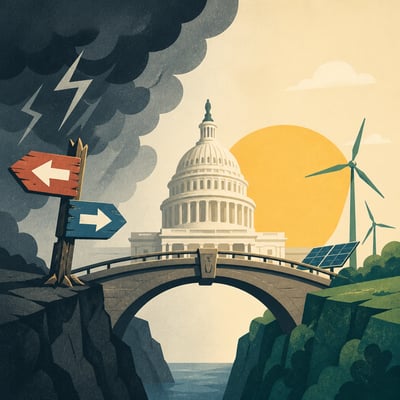
The topic centers on calls for a more stable and nuanced U.S. climate policy that can support long-term investment while balancing economic and environmental risks. The cited reversals over international commitments, energy subsidies, and carbon-dioxide regulation are presented as evidence of policy uncertainty, while the debate also touches on fossil-fuel phaseout incentives and the possible role of nuclear power. The discussion argues that candidates should address climate policy through substantive, less polarized debate during the election season.
First Article: 04/07/26
Latest Article: 05/05/26
Summary
- The central argument is that frequent changes in U.S. climate policy make long-term business and household investment more difficult.
- The pieces cite shifts in Paris Agreement participation, energy subsidies, and EPA treatment of carbon dioxide as examples of policy reversal.
- The authors distinguish policy uncertainty from changes in climate science, which they describe as broadly consistent over time.
- Climate-related insurance costs, seasonal conditions, and agricultural concerns are presented as practical signals of ongoing impacts.
- The discussion rejects an all-or-nothing debate between climate catastrophe claims and denial, calling for more policy-focused dialogue.
- Key unresolved questions include the pace of fossil-fuel phaseout, economic disruption risks, and whether nuclear power should contribute to decarbonization.
- The material frames the issue as relevant to evaluating candidates during the U.S. election season.
History
The framing has shifted from a broad account of climate-policy instability to a more explicit call for pragmatic, less polarized climate debate during the 2026 election season. The new version also foregrounds nuclear power and the tradeoffs around decarbonization, economic disruption, and policy design.
The story shifts slightly from broad climate-policy instability to a more explicit emphasis on how predictable rules affect investment, enforcement, and decarbonization. It also adds a new policy-search angle, with fossil-fuel phaseout incentives and nuclear power framed as possible durable alternatives.
Featured
Timeline: 29 Days
Hover over any logo to see coverage summary, click for full article.