
 Climate
 Privacy
 Bob Dylan
 Drones
 Data Centers
 AI Governance
 2026 Maine Senate Race
U.S. Climate Treaty Withdrawal
Coverage from Inside Climate News, Earth.Org, and others
Articles
6
Active Days
322
The Topic
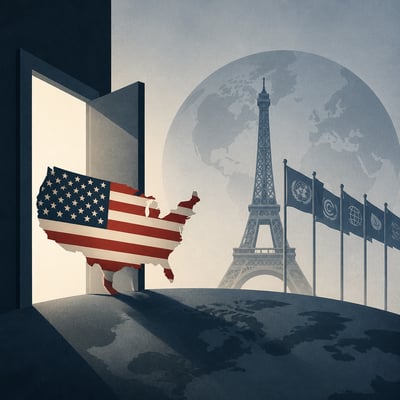
The latest developments show the United States formally exiting the Paris Agreement and related UN climate institutions, reducing its role in climate diplomacy, funding, and scientific cooperation. The strongest recurring thread is conflict between federal retreat and continued climate action by states, cities, and international partners. Legal uncertainty around reentry and treaty authority remains part of the picture, but the dominant signal is a clear federal pullback from multilateral climate governance.
First Article: 04/08/25
Latest Article: 02/23/26
Summary
- The dominant development is a renewed U.S. withdrawal from the Paris Agreement and related UN climate institutions.
- Articles repeatedly describe reduced U.S. influence in international climate negotiations, funding, and scientific coordination.
- A major tension is emerging between federal disengagement and continued action by states and cities on electrification, climate superfund laws, and other policies.
- Several pieces note legal and procedural uncertainty over how a future U.S. administration could rejoin climate treaties.
- The cluster also highlights potential trade and competitiveness effects, including exposure to carbon border measures and weaker alignment with global decarbonization standards.
- International actors and climate officials frame the U.S. retreat as damaging to cooperation, but not enough to stop broader clean-energy and decarbonization momentum.
- The signal is coherent and fairly dense, with most current coverage reinforcing the same governance and diplomacy theme rather than diverging into unrelated climate issues.
History
This topic is new, but as new articles are added to it this area will summarize shifts, changes and expansions of the issues.
Featured
Timeline: 322 Days
Hover over any logo to see coverage summary, click for full article.