
 Climate
 Privacy
 Bob Dylan
 Drones
 Data Centers
 AI Governance
 2026 Maine Senate Race
Virginia Accelerates Battery Storage
Coverage from Inside Climate News, Canary Media, and others
Articles
8
Active Days
46
The Topic
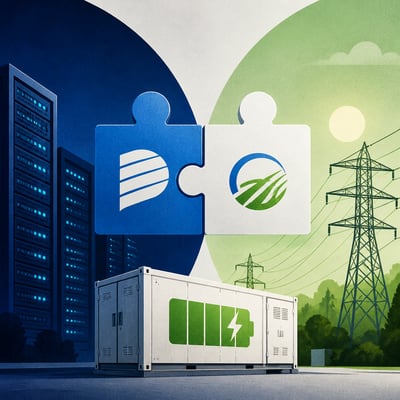
Virginia and neighboring states are accelerating battery storage installations as data center growth, peak demand, extreme weather, and renewable generation increase pressure on the electric grid. The trend spans large standalone facilities, smaller cooperative projects, commercial systems, and new state requirements, while NextEra’s proposed $67 billion acquisition of Dominion could give the combined company a larger role in meeting Virginia’s storage needs. Storage is being promoted primarily for reliability, cost management, capacity, and grid flexibility, although its pace will depend on approvals, interconnection, financing, and implementation.
First Article: 05/04/26
Latest Article: 06/18/26
Summary
- Virginia is moving toward substantially higher battery-storage requirements, including reported goals of 4 gigawatts by 2030 and 20 gigawatts across short- and long-duration systems by 2045.
- The proposed NextEra-Dominion merger is closely tied to Virginia’s data center demand and could accelerate Dominion’s storage procurement and capital investment.
- The 150-megawatt, 600-megawatt-hour Prospect Power facility in Rockingham County was presented as the largest standalone battery project in the PJM region.
- Virginia and North Carolina cooperatives are using smaller batteries and microgrids to reduce peak costs, support solar, and limit outages during extreme weather.
- Commercial storage is expanding through energy-as-a-service models that remove upfront costs and combine batteries with solar and efficiency upgrades.
- Storage remains a practical grid-management tool for many adopters, even where emissions reduction is not the primary motivation.
- Implementation faces challenges including PJM interconnection delays, permitting, market rules, customer-rate concerns, and uncertainty over merger approval.
History
The story now frames Virginia storage as a broader regional buildout, not just a Virginia-centric utility issue, with North Carolina cooperatives and commercial customers playing a clearer role. It also adds a stronger emphasis on implementation frictions and merger-related acceleration, rather than just policy targets and major projects.
The story now centers more explicitly on Virginia’s battery buildout as a response to data center-driven demand, while adding a potentially transformative Dominion-Nextera acquisition that could reshape the pace of deployment. It also introduces a major standalone storage project and highlights unresolved regulatory and cost constraints.
Featured
Timeline: 46 Days
Hover over any logo to see coverage summary, click for full article.