
 Climate
 Privacy
 Bob Dylan
 Drones
 Data Centers
 AI Governance
 2026 Maine Senate Race
Pulaski County Data Center Backlash
Coverage from Washington Post, KATV, and others
Articles
31
Active Days
53
The Topic
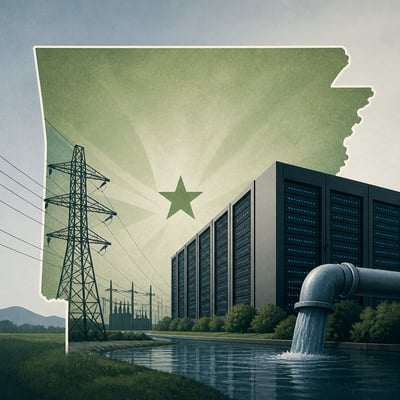
Pulaski County, Arkansas, is debating two large planned data centers: a roughly $1 billion Google facility near the Port of Little Rock and a larger AVAIO Digital project near Wrightsville. Residents and some local officials are seeking stronger rules or a moratorium, citing limited public input, high projected electricity and water demand, environmental risks, noise, and possible effects on utility rates. Project supporters and utilities say the developments will create jobs and tax revenue while operators will cover dedicated infrastructure costs and the water system can absorb the demand, leaving key questions focused on transparency, enforceable protections, and final project requirements.
First Article: 05/10/26
Latest Article: 07/01/26
Summary
- Google is planning a roughly $1 billion data center near the Port of Little Rock, while AVAIO Digital is planning a roughly $6 billion facility near Wrightsville.
- The projects are expected to require more than 100 megawatts for Google and about 150 megawatts for AVAIO, with additional demand for cooling and related systems.
- Central Arkansas Water says each facility could use up to 4 million gallons per day without reducing residential reliability or requiring customer rate increases; critics dispute whether the long-term impacts are fully understood.
- Residents and local officials object to limited public disclosure, including invite-only meetings and broad nondisclosure agreements used during economic-development negotiations.
- Pulaski County residents are pressing for a moratorium or stronger local rules, while Arkansas law limits local governments’ ability to ban data centers.
- Supporters emphasize investment, jobs, tax revenue, and commitments to cover dedicated utility infrastructure costs.
- Little Rock adopted modest data center regulations, but opponents continue to seek stronger safeguards and more public participation.
History
The story is now framed more explicitly around Pulaski County's push for a moratorium or stronger local controls, alongside new legal uncertainty over how much authority local governments actually have. The public-disclosure dispute also became more central, while the utility-cost debate was sharpened by more specific statements about water and power impacts.
The story has sharpened from a general local zoning and moratorium fight into a more concrete dispute over two named hyperscale projects, their scale, and the transparency of the approval process. The new version adds stronger claims about utility impacts, public skepticism of closed-door planning, and the fact that Little Rock has already adopted some regulations while county action remains under consideration.
Featured
Timeline: 53 Days
Hover over any logo to see coverage summary, click for full article.