History
07/27/20260 new articles
The story has broadened from simple moratoriums into a more formal regulatory review process, with added emphasis on expanded restrictions and longer proposed pauses in some Colorado communities. The biggest new wrinkle is that Lochbuie residents are now pushing for a much longer moratorium than initially proposed, alongside stronger scrutiny of land use, emissions, and utility costs.
07/25/20260 new articles
The story has become more specific and operational: Denver and Minneapolis have now formally enacted pauses, while Aurora is actively shaping new restrictions and Denver Water’s estimates have sharpened the water-usage debate around a proposed CoreSite campus. The update also reframes the issue around delays to approvals and investment uncertainty, not just general regulatory catch-up.
- Denver approved a one-year pause on new data center construction.
- Minneapolis approved a five-month pause with exemptions for some smaller downtown facilities.
- Aurora is considering new rules that effectively limit heavy evaporative cooling.
- CoreSite’s proposed north Denver campus could use up to 805,000 gallons of water daily.
- Denver Water provided water-use estimates for the proposed CoreSite campus.
07/24/20267 new articles
The story has broadened from a few Colorado city and county pauses into a wider pattern of fragmented local data-center restrictions across more Colorado municipalities, with Minneapolis remaining the main outside comparison. The emphasis also shifts toward the mechanics of local regulatory catch-up—zoning, permitting, and operational standards—rather than just temporary moratoriums.
- Broomfield approved an 18-month moratorium and code review process.
- Monument and Aurora have joined the Colorado policy response.
- Local governments cite gaps in codes for siting, size, cooling, and infrastructure impacts.
- Some jurisdictions are adopting narrower thresholds or carveouts.
- Minneapolis is studying environmental and fiscal effects before drafting rules.
07/02/20263 new articles
The story has become more concrete: Denver and Minneapolis have now moved from general tightening to explicit temporary moratoriums, while additional Colorado counties are codifying their own definitions, disclosure, and review standards as statewide legislation remains unresolved. The emphasis has also sharpened around CoreSite’s expansion plans as a catalyst for local regulatory action.
06/28/20263 new articles
The story has broadened from Denver’s standalone moratorium to a wider Colorado-and-Minneapolis regulatory wave, with local governments now taking the lead after statewide action stalled. The new emphasis is on a coordinated set of local siting, water, utility, and noise restrictions that could materially slow future data center buildout.
- Minneapolis adopted a temporary pause on new data center development.
- Colorado statewide data center proposals stalled in the legislature.
- Weld, Larimer, and Logan counties added local data center restrictions.
- Local rules now include water proof, electricity access, and noise limits.
06/23/2026Topic Formed
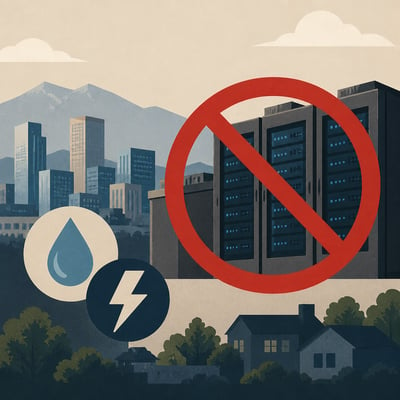
Denver has approved a one-year moratorium on new data center construction while city officials study permanent rules for the sector. The pause is aimed at managing water and energy demand, noise, zoning, and neighborhood impacts, especially in areas near existing industrial facilities. Existing data centers and projects already under construction remain exempt, though future expansions may face new limits.

 Climate
 Privacy
 Bob Dylan
 Drones
 Data Centers
 AI Governance
 2026 Maine Senate Race