
 Climate
 Privacy
 Bob Dylan
 Drones
 Data Centers
 AI Governance
 2026 Maine Senate Race
Seattle And Spokane Freeze Data Centers
Coverage from MyNorthwest.com, UW College of Engineering, and others
Articles
15
Active Days
62
The Topic
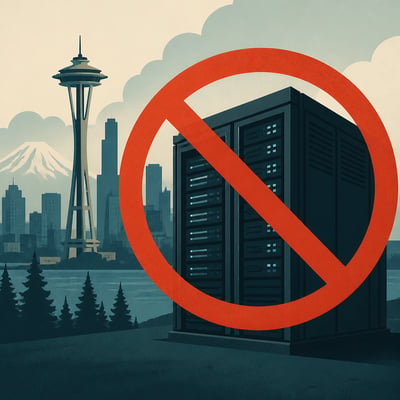
Seattle and Spokane are temporarily restricting new large data centers while officials assess their effects on electricity capacity, water, utility rates, land use, public health, and local employment. The measures followed proposals for facilities with potentially substantial power demand and strong community opposition, creating uncertainty for developers while cities consider permanent rules and how large customers should pay for associated infrastructure.
First Article: 05/26/26
Latest Article: 07/26/26
Summary
- Seattle approved an immediate moratorium on new data centers above 20 MVA, with a possible six-month extension.
- Five Seattle-area proposals were reported at a combined maximum demand of 369 MW, prompting concern about Seattle City Light’s staffing and grid capacity.
- Seattle’s review covers electricity, water, utility rates, land use, public health, and employment before permanent policy decisions.
- Spokane approved a one-year, 6-1 moratorium after Avista discussed a potential 500 MW customer whose identity and location remain unclear.
- Residents and community groups in Seattle pressed for continued restrictions or a ban, citing resource use, pollution, noise, and limited community benefits.
- Developers face delays and uncertain siting rules as officials weigh protections for ratepayers and resources against projects and related economic activity.
History
The core story is largely unchanged, but the framing has sharpened around local power capacity and how large data center customers should fund related infrastructure. The current version also drops some earlier specifics, such as the named developer examples and Seattle’s employee-staffing concern.
The story has moved from local planning and review into confirmed one-year freezes in Seattle and Spokane, with both cities now explicitly tying the moratoria to major utility-capacity concerns and possible permanent regulation. Seattle’s scale and Spokane’s Avista-related 500-megawatt context make the potential impact look larger and more concrete than before.
Featured
Timeline: 62 Days
Hover over any logo to see coverage summary, click for full article.